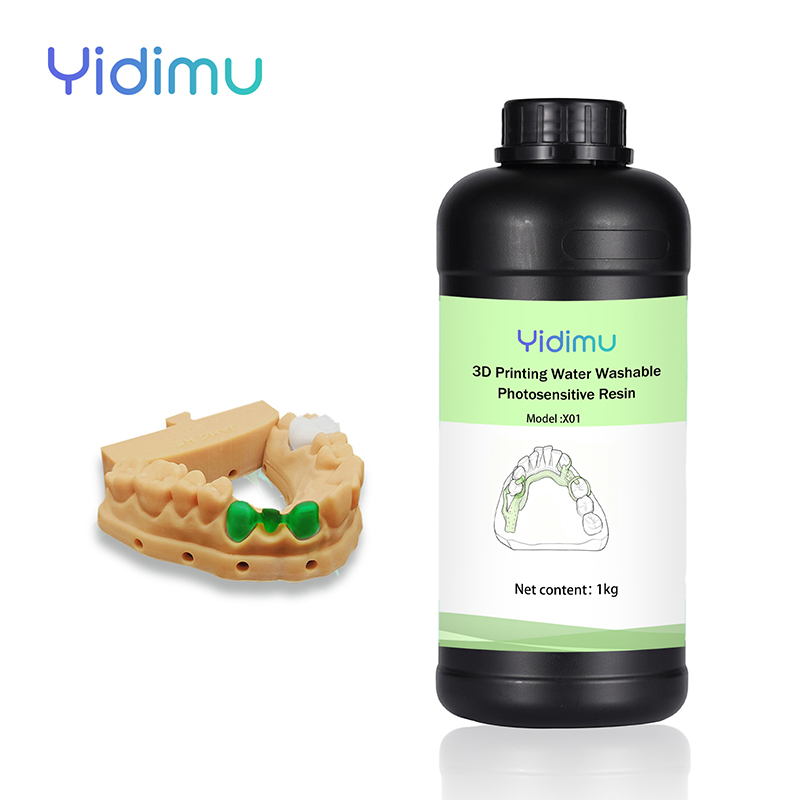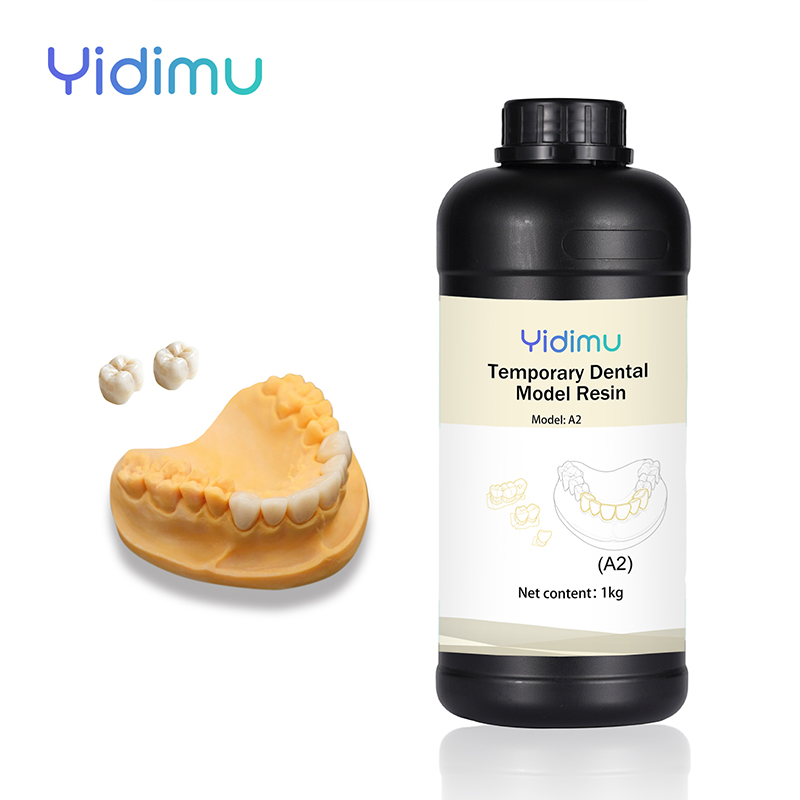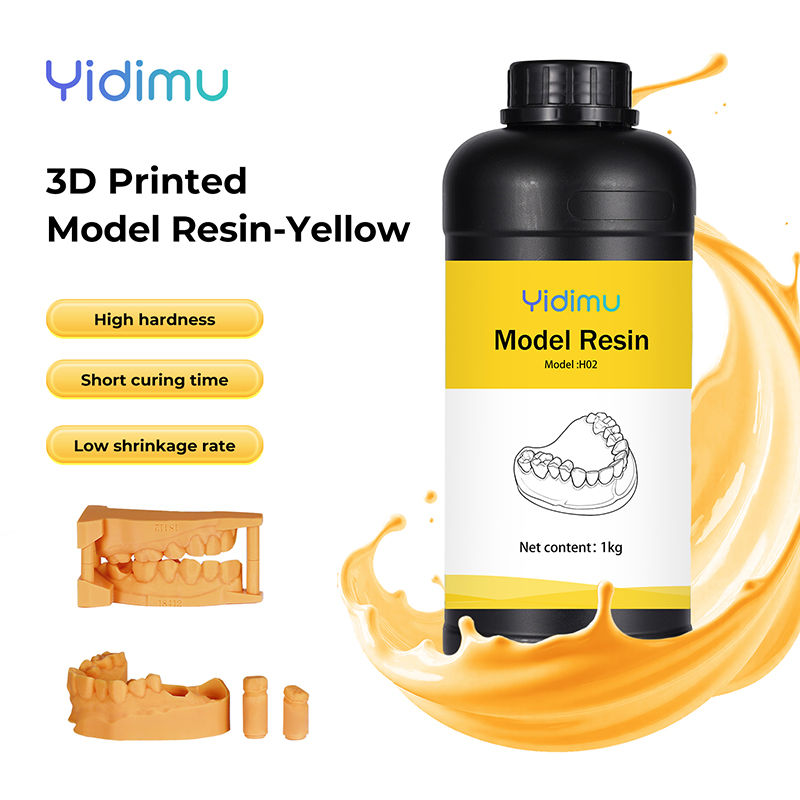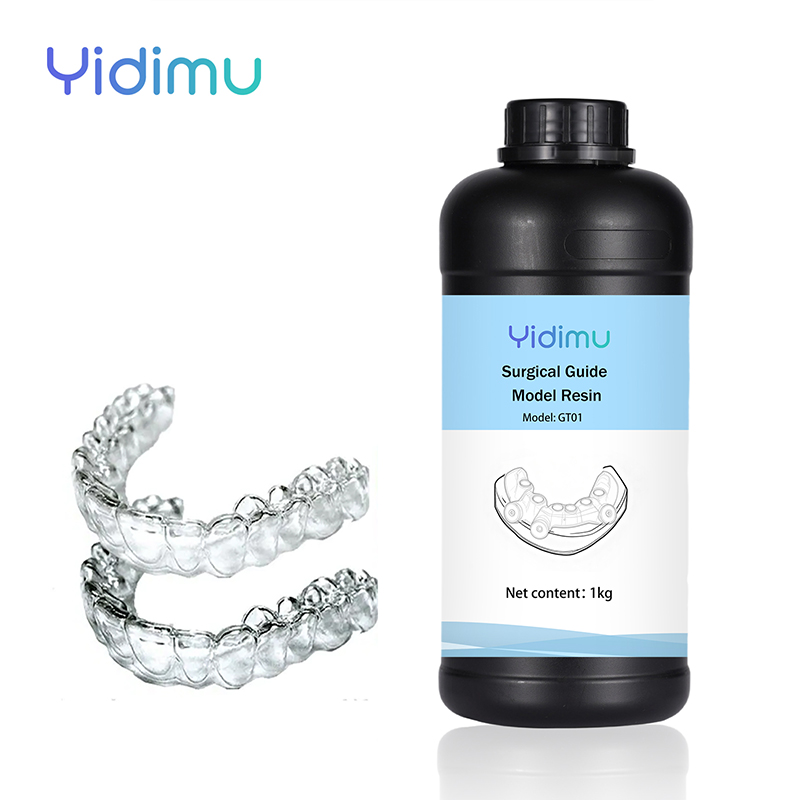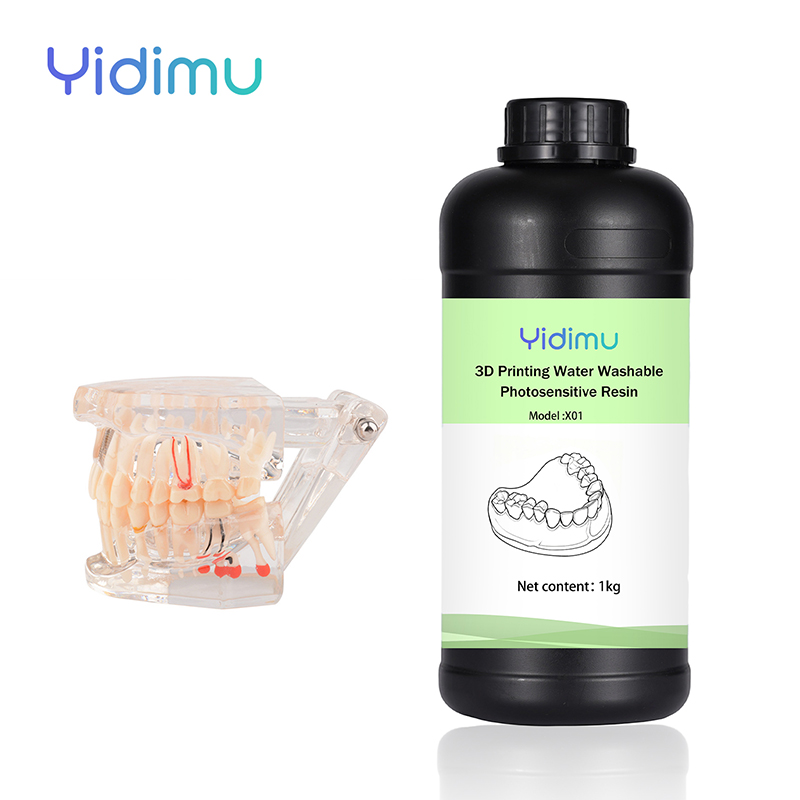
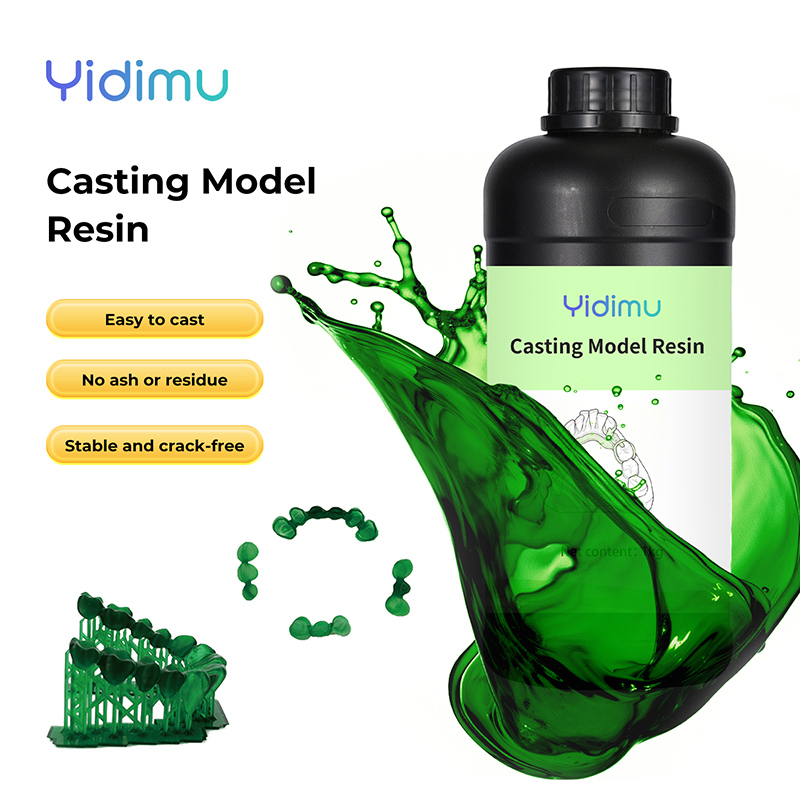
Yidimu Casting Model Resin
Photopolymer casting model resin for professional dental casting pattern workflows.
Yidimu Casting Model Resin is developed for dental labs and precision model workflows that require fine detail, good resin flow, stable printing and compatibility with LCD/DLP photopolymerization systems.
Built for Detailed Casting Model Preparation
Yidimu Casting Model Resin supports digital-to-casting workflows in which printed patterns must retain small geometry, defined margins and stable surfaces through cleaning, drying and controlled post-curing.
It is intended for professional pattern and model preparation rather than direct final-use intraoral appliances. Printer settings, post-processing and downstream casting procedures should be validated for the selected equipment, investment material and application.
Performance Focused on the Printed Pattern
The formulation is positioned for controlled castable model preparation, where print stability, resin flow and surface definition influence downstream workflow quality.
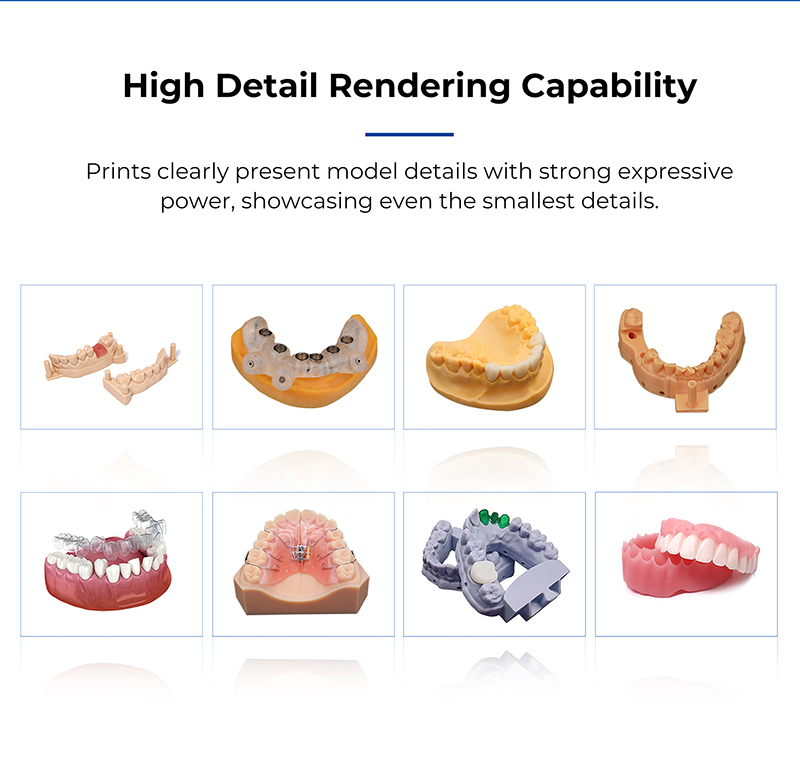
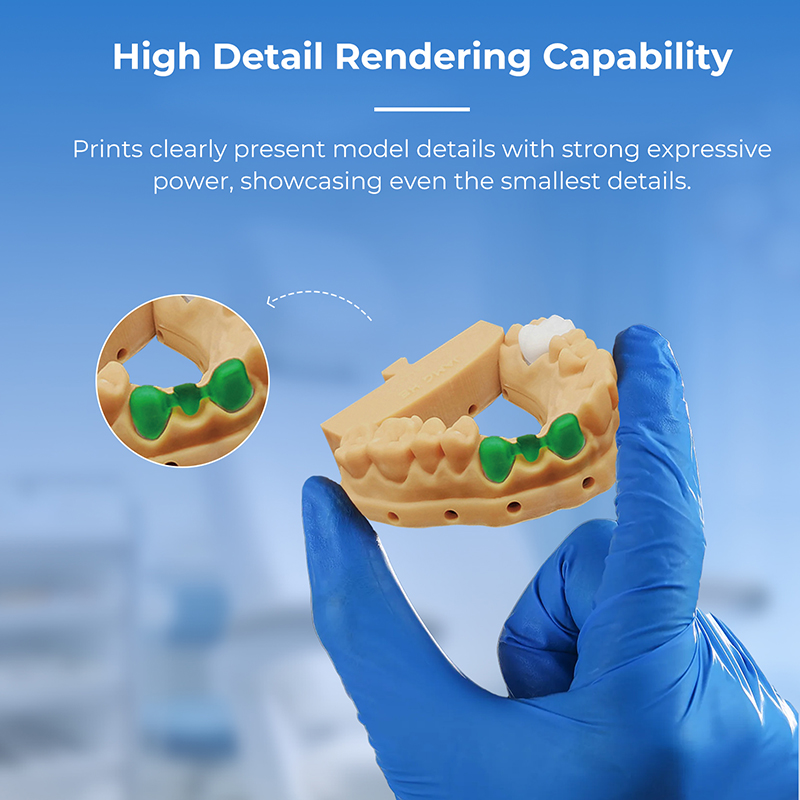
Fine Detail Rendering
Supports small dental structures, defined edges and surface features when orientation, exposure and supports are properly calibrated.
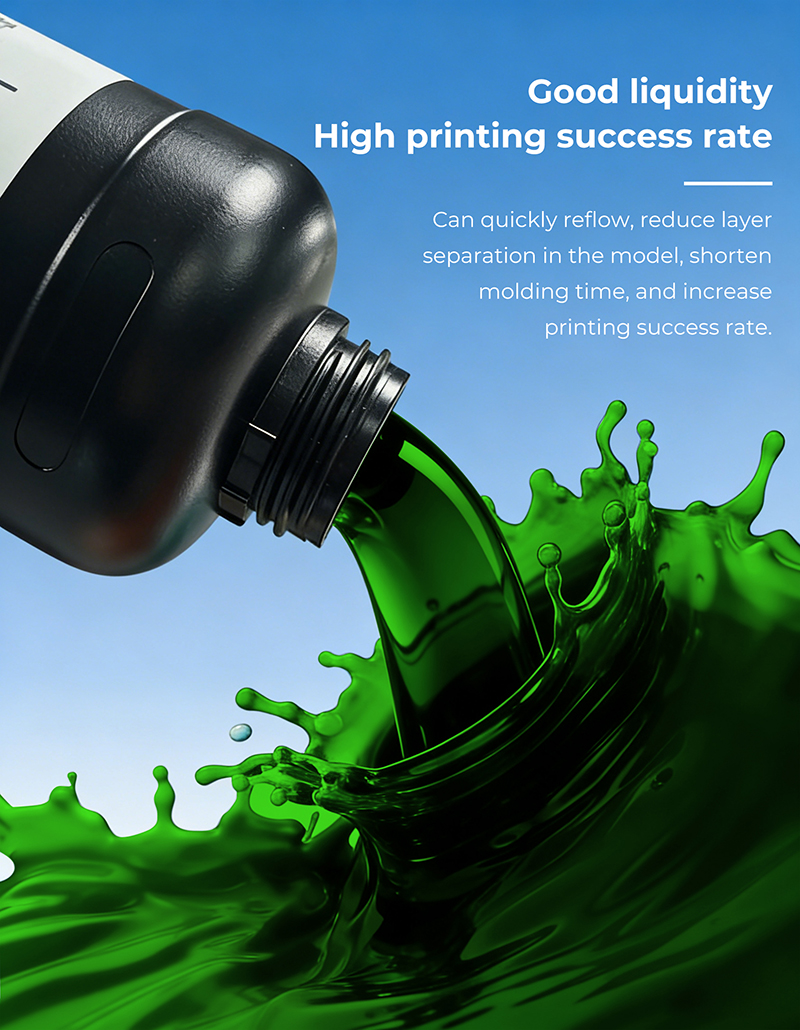
Good Resin Liquidity
Flow behavior supports resin refill between layers and helps maintain a controlled layer-forming cycle.
Stable Model Output
Developed for repeatable pattern preparation when printer condition, temperature and post-processing are kept consistent.
Geometry Retention
Controlled exposure and curing help the printed model retain its intended geometry before investment and casting preparation.
Professional Workflow Fit
Suitable for dental labs, model workshops and technical teams evaluating resin printing for casting patterns.
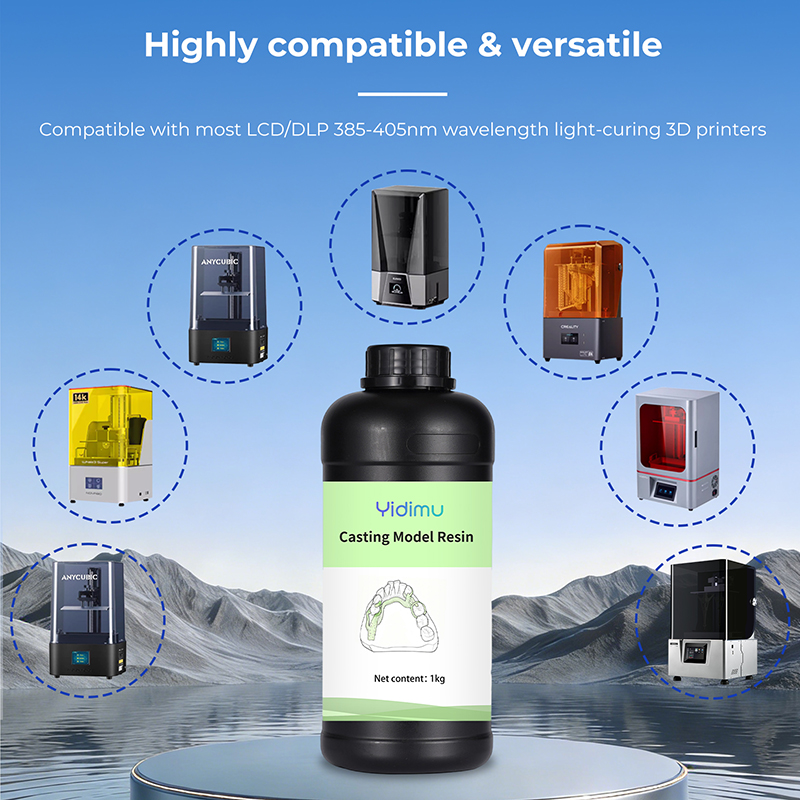
Broad Printer Compatibility
Designed for many LCD and DLP photopolymerization printers operating within the stated wavelength range.
From Digital Geometry to a Physical Casting Pattern
Successful casting model printing depends on the complete process: file preparation, support strategy, controlled exposure, careful cleaning, complete drying and application-specific post-curing.
Professional Dental Casting Pattern Workflows
Use the resin for printed models and patterns that will be evaluated, invested or prepared for a validated downstream casting process.
Dental Framework Patterns
For removable partial denture framework pattern preparation and related model structures used in controlled laboratory casting workflows.
Crown and Bridge Patterns
For detailed crown, bridge and small pattern preparation before investment and downstream processing.
Precision Model Trials
For technical teams testing model geometry, support strategy and casting preparation before routine production.
Dental Lab Casting Models
For dental laboratories preparing detailed printed models and patterns as part of a documented, application-specific casting workflow.
Starting Information for Printer Evaluation
These values are initial references, not universal settings. Final exposure and process settings must be calibrated for the printer, optical power, resin temperature, vat condition, model geometry and intended casting workflow.
Material Profile
- ProductCasting Model Resin
- Material TypePhotopolymer Resin
- Visible ColorGreen
- Printer TypeLCD / DLP
- Compatible Wavelength385–405 nm
- Net Content1 kg
Mechanical properties and casting-cycle data should be published only from the latest confirmed Yidimu TDS and workflow documentation.
Recommended Starting Parameters
- Light Intensity3.1–5 mW/cm²
- Layer Thickness0.05 mm
- Normal Exposure2–3 s
- Bottom Exposure20 s
- Bottom Layers5 layers
- Printing Temperature18–35°C
Run an exposure calibration and inspect feature size, support strength and dimensional response before production printing.
A Controlled Path from File to Finished Pattern
Document each stage so printing, cleaning and curing can be repeated consistently across batches and printer operators.
Prepare the File
Check geometry, wall thickness, orientation and support placement in the slicing software.
Prepare the Printer
Inspect the platform, vat film, optical path and resin tank for cleanliness and damage.
Mix and Pour
Shake or mix as directed, then pour clean resin into the vat without introducing contamination.
Print and Calibrate
Begin with reference settings and adjust exposure from measured print results.
Clean and Dry
Remove surface resin using the validated cleaning method, then allow the pattern to dry fully.
Cure and Inspect
Apply controlled UV post-curing, then inspect detail, distortion, cracks and pattern integrity.
Cleaning and Curing Require Process Control
Residual uncured resin, incomplete drying or excessive UV exposure can affect surface quality and dimensional response. Use the latest product instructions and validate the complete process before production.
- Use clean, compatible cleaning liquid according to product documentation.
- Keep the cleaning time controlled and avoid unnecessary prolonged soaking.
- Allow the model to dry fully before UV post-curing.
- Verify curing time with the curing unit, model size and pattern geometry.
- Inspect fine margins, support contact areas and visible deformation.
Protect the Resin and the Printing Environment
Professional resin handling should follow the current SDS, product label and local workplace requirements.
Prepare Clean Equipment
Mix the resin as directed and confirm that the vat, platform and optical area are clean before starting the job.
Use Suitable Protection
Wear appropriate gloves and eye protection, avoid skin contact and maintain suitable workplace ventilation.
Store Away from Light
Filter reusable resin when appropriate, close the container tightly and protect it from sunlight, heat and unintended UV exposure.
Common Questions
Confirm application-specific requirements with Yidimu before routine production or downstream casting validation.
What is Yidimu Casting Model Resin used for?
It is intended for printing detailed casting models and patterns used in professional dental laboratory and precision model workflows.
Which printers are compatible with this resin?
It is designed for many LCD and DLP photopolymerization printers operating within the 385–405 nm wavelength range. Printer-specific calibration is still required.
Is 0.05 mm the only supported layer thickness?
No. It is presented as a reference layer thickness. Other layer heights may require separate exposure, support and dimensional calibration.
Can one exposure setting be used on every printer?
No. Exposure depends on light intensity, optical system, screen condition, vat film, temperature, model geometry and resin condition.
Is this a direct final-use intraoral material?
This page positions the product as a casting model and pattern resin. Any clinical or final-use application requires separate confirmation of intended use, material documentation and applicable regulatory requirements.
What information should I send for parameter support?
Provide the printer model, wavelength, measured light intensity, layer thickness, model geometry, support strategy, print photographs and the problem you need to solve.
Need Casting Model Resin for Your Dental Lab?
Contact Yidimu to discuss printer compatibility, sample evaluation, starting parameters, post-processing and your intended casting model workflow.