Dental 3D printing is no longer limited to experimental model making. Many dental labs and clinics now rely on resin 3D printers for dental models, orthodontic model review, implant planning support, surgical guide workflows, custom trays, temporary dental applications and appliance-related preparation. For buyers, one question matters most: how accurate does the printer actually need to be?
There is no single number that answers this. Dental 3D printer accuracy requirements depend on the complete workflow, not just the machine specification. A printer with a high-resolution screen or small XY pixel size can still produce poor results if the resin is unsuitable, the build platform is uncalibrated, exposure settings are unstable, supports are poorly designed, or post-curing is not controlled.
For professional users, the buying decision should center on repeatable workflow accuracy. A dental lab doesn’t need one perfect sample print — it needs a printer, resin and post-processing system that delivers consistent results across batches, operators, model sizes and daily production conditions.
Why Accuracy Matters in Dental 3D Printing
Dental parts are often small, detailed and fit-sensitive. A slight dimensional deviation can affect model seating, margin visibility, appliance fit or the reliability of downstream work. In model production, accuracy helps ensure the printed model represents the digital design closely enough for its intended task. Guide or appliance-related workflows can be more demanding, since the printed part may interact with patient-specific anatomy or clinical procedures.
Accuracy also affects business performance. Poor repeatability leads to remakes, wasted resin, delayed delivery, extra chairside adjustment, customer complaints and unpredictable production cost. For labs and clinics, reliable accuracy is part of workflow control, not just a technical feature.
That said, accuracy should always be discussed within the correct boundary. A printed dental model may suit visual review or orthodontic planning support without being suitable for every clinical or intraoral application. Resin indication, printer compatibility, validated parameters, post-curing and local regulations must be reviewed before using printed parts in clinical or body-contact situations.
Accuracy Is More Than Resolution
Many buyers compare dental 3D printers by XY resolution, LCD screen resolution, layer thickness or advertised pixel size. These figures are useful, but they don’t fully describe print accuracy.
Trueness
Trueness describes how close the printed part is to the intended digital design or reference model. If a dental arch is designed with a specific width, height and tooth geometry, trueness reflects how closely the printed model matches those dimensions.
Precision
Precision describes repeatability. If the same dental model is printed multiple times under the same conditions, precision shows whether results stay consistent from print to print.
Repeatability in Daily Use
Repeatability matters most for production users. A printer may produce one accurate test model, but buyers should ask whether it maintains similar results across multiple builds, different areas of the platform, different operators and different resin batches.
Surface Detail
Dental workflows often need smooth surfaces and readable anatomy. Even when overall dimensions are acceptable, poor surface quality can affect margin visibility, model inspection or appliance finishing.
Dimensional Stability After Post-Processing
Dental resin parts can shift slightly during washing, drying, UV curing or storage. A buyer should review the final part after the complete post-processing workflow, not only immediately after printing.
Practical Table: What Accuracy Requirements Should Buyers Review?
| Review Area | What to Check | Why It Matters | Buyer Question |
|---|---|---|---|
| Trueness | Difference between printed model and digital file | Shows whether the printer can reproduce the intended geometry | How close is the printed model to the CAD reference? |
| Precision | Variation between repeated prints | Shows production consistency | Can the printer repeat the same result across multiple builds? |
| XY detail | Pixel size, optical uniformity and edge definition | Affects small features and surface detail | Is the XY resolution suitable for dental anatomy and margin details? |
| Z-axis stability | Layer thickness, Z movement and platform stability | Affects vertical accuracy and surface layering | Is the Z-axis stable during long or full-platform prints? |
| Build platform uniformity | Accuracy at center, corners and across the full plate | Important for batch production | Are models consistent across the full printing area? |
| Resin compatibility | Resin indication, viscosity, wavelength and validated parameters | Resin strongly affects accuracy and mechanical behavior | Is the resin suitable for this dental application and printer? |
| Support strategy | Support placement, contact size and orientation | Poor supports can cause deformation or surface marks | Can the model be supported without affecting key surfaces? |
| Washing process | Cleaning time, solvent type and drying control | Over-washing or poor cleaning may affect surface and fit | What cleaning process is recommended for this resin? |
| UV curing | Curing time, wavelength, temperature and part orientation | Final properties and dimensions may depend on curing | Is the curing process controlled and compatible with the resin? |
| Inspection method | Calipers, scan comparison, fitting test or lab QC | Accuracy must be measured with a suitable method | How will the lab confirm acceptable results? |
Common Dental Applications and Accuracy Priorities
Dental Models
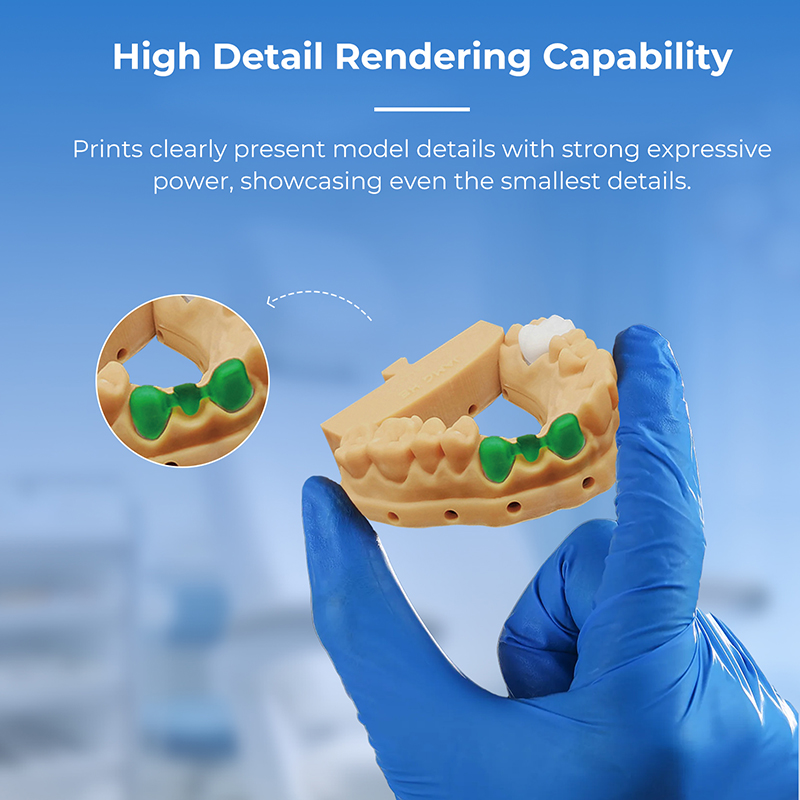
Dental models are one of the most common uses of resin 3D printing. For model workflows, buyers should review full-arch accuracy, surface smoothness, margin visibility, platform consistency and whether the printed model stays dimensionally stable after cleaning and curing.
A model used for general visual communication may have different requirements from one used for crown and bridge support, orthodontic review or appliance preparation. Buyers should define the model’s final use before selecting a printer.
Orthodontic Models
Orthodontic model printing usually requires stable full-arch geometry and repeatable output. Key concerns include arch width, tooth shape, base design, surface finish and batch consistency. For labs printing many models per day, platform uniformity and workflow speed become important.
Surgical Guide Workflows
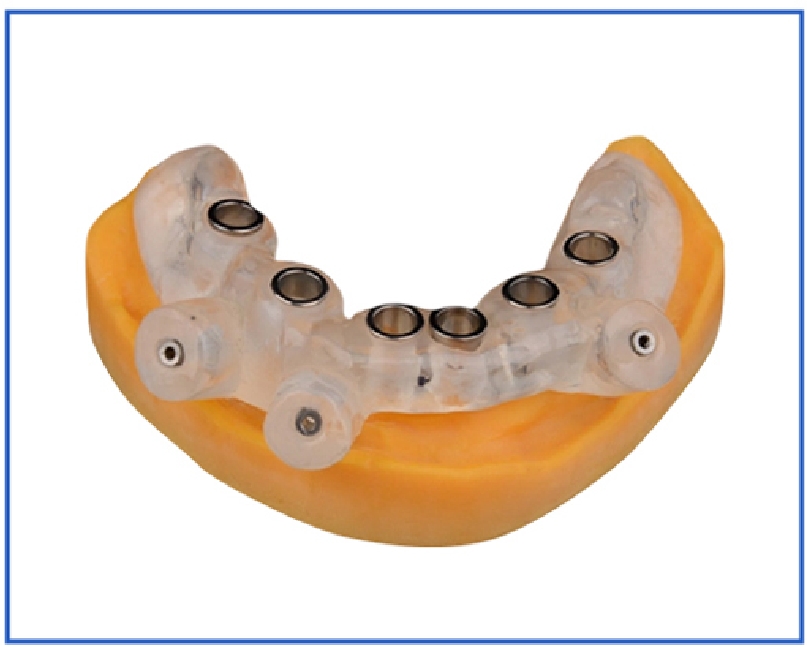
Surgical guide-related workflows call for more cautious review, since the printed part may be used in a clinical planning or intraoral environment depending on the workflow. Buyers shouldn’t evaluate these workflows by printer resolution alone. They should review resin indication, guide sleeve fit, support design, cleaning, UV curing, sterilization or disinfection requirements where applicable, and local regulatory requirements.
Customers should confirm resin indication, post-curing process and local regulatory requirements before clinical or intraoral use.
Temporary Dental Applications
Temporary crowns, bridges or other temporary dental applications require careful material selection and process control. Accuracy matters, but so do resin indication, mechanical properties, surface finishing, shade, curing and clinical workflow requirements. A printer that performs well for models isn’t automatically suitable for temporary dental use.
Custom Trays, Splints and Appliance-Related Workflows
These workflows may require a balance between dimensional accuracy, fit, strength, surface finish and biocompatibility-related requirements depending on the resin and intended use. Buyers should review the complete workflow rather than assume one dental resin can support every application.
Key Printer Factors That Affect Dental Accuracy
1. Optical System and Light Uniformity
In LCD or other light-curing resin printers, light exposure must stay controlled across the build area. Uneven light intensity can cause dimensional differences between the center and edges of the platform. For dental labs printing multiple arches at once, light uniformity can matter more than a single headline resolution number.
2. XY Resolution and Edge Definition
XY resolution affects how well the printer reproduces fine horizontal details. Practical edge definition, however, also depends on exposure settings, resin behavior, anti-aliasing, screen quality and optical calibration. Buyers should ask for sample prints that match their real dental models rather than judging from technical specifications alone.
3. Z-Axis Stability
Dental models often have broad surfaces, vertical features and thin details. Z-axis stability affects layer consistency, surface smoothness and dimensional accuracy. A stable mechanical structure matters especially for long prints and repeated production.
4. Build Platform Calibration
Poor leveling or weak platform stability can cause uneven first layers, poor adhesion, model distortion or inconsistent results. Buyers should confirm how easy the platform is to calibrate and whether the printer holds calibration during routine use.
5. Resin Temperature and Working Environment
Resin viscosity and curing behavior can change with temperature. A workflow that performs well in one environment may behave differently in a colder or hotter production room. Buyers should confirm recommended operating conditions and resin handling requirements.
6. Resin Selection
Resin is not just a consumable — it’s part of the accuracy system. Different dental resins can have different shrinkage behavior, viscosity, exposure response, mechanical properties and post-curing requirements. Resin should be chosen according to application, not price alone.
7. Slicing Settings
Layer thickness, exposure time, bottom exposure, lift speed, orientation and support design all affect final accuracy. For dental users, the best printer isn’t just the one with strong hardware — it’s the system that provides practical, repeatable parameters for the intended resin and application.
Workflow or Checklist: How to Review Dental 3D Printer Accuracy Before Buying
Use this checklist before choosing a dental 3D printer.
Step 1: Define the Main Dental Application
Clarify whether the printer will mainly be used for dental models, orthodontic models, surgical guide workflows, temporary dental applications, custom trays, splints, appliance-related workflows or research models.
Don’t buy a printer based on a general “dental printer” label — required accuracy and resin workflow can differ by application.
Step 2: Confirm the Largest Model Size
Check the largest arch, model base or appliance size you need to print, and how many models you want per batch. A printer should support both the required size and your desired daily throughput.
Step 3: Ask for Real Sample Printing
A test cube isn’t enough. Ask for sample prints based on your real model type — a full-arch model, a trimmed base model or a detailed dental sample, for example. Review surface quality, fit, edge detail and dimensional consistency.
Step 4: Review Accuracy After Complete Post-Processing
Measure or inspect the part after washing, drying and UV curing. Accuracy before curing may not represent the final part used in the workflow.
Step 5: Check Platform Consistency
If batch production matters, print models in different areas of the platform and compare parts from the center, corners and edges. This helps reveal whether the printer suits multi-model production.
Step 6: Review Resin Compatibility
Confirm the resin type, wavelength compatibility, indication, recommended settings, cleaning process and post-curing process. For dental or body-contact applications, confirm regulatory and material requirements before use.
Step 7: Evaluate Repeatability
Print the same model several times. Repeatability tells you more than one successful print — for labs and clinics, stable results over time matter more than a single high-quality demonstration sample.
Step 8: Confirm Inspection Method
Decide how your team will check accuracy. Depending on the workflow, this may include fit testing, scan-to-CAD comparison, caliper measurement, visual inspection or internal QC standards.
Step 9: Review Operator Training
A printer used by trained technicians may perform differently from one used by multiple new operators. Check whether the supplier can support setup, parameter guidance, troubleshooting and workflow training.
Step 10: Calculate the Complete Workflow Cost
Accuracy problems create hidden costs. Factor in resin waste, failed prints, remake time, labor, cleaning supplies, curing equipment and technical support needs.
What Accuracy Level Is “Good Enough”?
There is no universal accuracy number that applies to every dental 3D printing workflow. A useful target depends on the application risk, fitting requirement, inspection method and local professional standards.
A study model used for communication, for example, may tolerate more variation than a model used for precise appliance fabrication. A surgical guide workflow may require stricter control than a display model. A temporary dental application may call for review of both dimensional accuracy and material properties.
Instead of asking only, “What is the printer accuracy?” buyers should ask:
- What application is this accuracy suitable for?
- Was the result measured before or after curing?
- What resin and settings were used?
- Was the test done on a small object or full-arch model?
- Was the result repeated across multiple prints?
- Was the full build platform tested?
- Is the resin indicated for the intended use?
- What local requirements apply to clinical or intraoral use?
This is a more reliable way to evaluate dental 3D printer accuracy requirements in real purchasing decisions.
How Resin and UV Curing Affect Accuracy
Resin materials can shrink, expand slightly, soften, harden or change mechanical behavior depending on exposure and post-processing. Washing removes uncured resin from the surface, but cleaning time and solvent process should follow the resin supplier’s recommendations — over-washing or incomplete drying can affect part quality. UV curing completes the curing process, and curing time, light wavelength, chamber design and temperature can all influence final properties.
For dental workflows, UV curing shouldn’t be treated as optional if the resin requires post-curing. A controlled curing process supports more consistent results, especially when the final part must meet a specific application requirement.
Yidimu supplies resin 3D printers, 3D printing resins, UV curing equipment and workflow support for professional users. The recommended approach is to review the printer, resin and curing workflow together rather than selecting each item separately.
How to Compare Dental 3D Printers for Accuracy
When comparing dental 3D printers, avoid judging by brochure specifications alone. A better comparison includes application testing, sample evaluation and workflow support.
Review these points:
- Printer technology and light source
- XY resolution and practical detail reproduction
- Z-axis structure and motion stability
- Build volume and platform uniformity
- Resin compatibility and application range
- Recommended printing parameters
- Cleaning and UV curing workflow
- Accuracy after post-processing
- Full-arch model performance
- Batch printing consistency
- Maintenance requirements
- Supplier technical support
- Availability of sample printing before purchase
It helps to prepare a standard test file and ask different suppliers to print the same model using their recommended workflow. This makes comparison more practical and reduces the risk of choosing based on incomplete specifications.
Common Mistakes to Avoid
Mistake 1: Judging Accuracy Only by Pixel Size
Pixel size matters, but it doesn’t guarantee final dental accuracy. Resin behavior, exposure control, Z-axis stability, support design and curing all play a role.
Mistake 2: Testing Only Small Calibration Models
A small test object may look accurate while a full-arch dental model shows distortion. Test real dental files, especially full-arch models or application-specific samples.
Mistake 3: Ignoring Post-Curing
Some buyers measure the print immediately after washing and overlook that UV curing can affect the final result. The finished part should be evaluated after the complete recommended process.
Mistake 4: Using the Same Resin for Every Dental Application
A model resin isn’t automatically suitable for surgical guide, splint or temporary dental applications. Confirm resin indication and workflow requirements for each use.
Mistake 5: Overlooking Platform Uniformity
A printer may perform well in the center but show variation near the edges — a real concern for labs printing multiple models at once.
Mistake 6: Assuming One Successful Sample Means Production Stability
Professional users need repeatability. Ask for repeated prints, not just one demonstration part.
Mistake 7: Ignoring Local Regulatory Requirements
Dental and medical applications may be regulated differently by country and intended use. Customers should confirm resin indication, post-curing process and local regulatory requirements before clinical or intraoral use.
Mistake 8: Buying Hardware Without Workflow Support
Accuracy problems often stem from workflow details. Supplier support for resin selection, slicing settings, curing and troubleshooting can matter as much as the machine itself.
Buyer Review Checklist
Before purchasing a dental 3D printer, confirm the following:
- Main dental application
- Required model size
- Daily or weekly printing volume
- Required surface detail
- Fit and tolerance expectations
- Resin type and indication
- Printer-resin compatibility
- Cleaning method
- UV curing process
- Inspection method
- Platform consistency
- Repeatability across multiple prints
- Operator training needs
- Technical support availability
- Local regulatory requirements for clinical or intraoral use
This checklist helps buyers move from general printer comparison to practical workflow evaluation.
FAQ
What are dental 3D printer accuracy requirements?
Dental 3D printer accuracy requirements are the dimensional, surface and repeatability expectations needed for a specific dental workflow. They may include trueness, precision, full-arch stability, surface detail, resin behavior and final accuracy after cleaning and UV curing.
Is XY resolution the same as dental printing accuracy?
No. XY resolution is only one factor. Final dental printing accuracy also depends on light uniformity, Z-axis stability, resin selection, exposure settings, support design, washing, curing and inspection method.
What is more important, trueness or precision?
Both matter. Trueness shows how close the printed part is to the digital design. Precision shows whether the printer can repeat the same result consistently. For labs and clinics, repeatability is often critical for daily production.
Can one dental 3D printer print models, guides and temporary restorations?
It may support multiple workflows depending on printer capability, resin compatibility and validated process settings. However, each application should be reviewed separately. A resin suitable for dental models is not automatically suitable for intraoral or temporary dental use.
Does UV curing affect dental 3D print accuracy?
Yes, UV curing may affect final dimensions, surface hardness and material properties depending on the resin and curing process. Printed parts should be evaluated after the complete recommended workflow, not only after printing.
How should a buyer test dental 3D printer accuracy before purchase?
The buyer should provide real dental files, print multiple samples, test different platform positions, complete the recommended washing and curing process, and inspect the final parts using a suitable method such as fit testing, measurement or scan comparison.
Are dental 3D printed parts ready for clinical use after printing?
Not automatically. Clinical or intraoral use depends on resin indication, printer compatibility, post-curing process, professional judgment and local regulatory requirements. Customers should confirm resin indication, post-curing process and local regulatory requirements before clinical or intraoral use.
Why do printed dental models sometimes shrink or warp?
Shrinkage or warping may be related to resin properties, exposure settings, model orientation, support design, cleaning, curing, wall thickness, base design or storage conditions. A stable workflow helps reduce variation.
What information should I send to Yidimu before asking for a recommendation?
Send your model size, dental application, resin requirement, expected workflow, daily printing volume, surface detail requirement and any available STL file or sample image. This helps Yidimu review suitable printer, resin and post-processing options.
Conclusion
Dental 3D printer accuracy requirements should be reviewed as a complete workflow issue, not just a printer specification. Buyers should evaluate trueness, precision, repeatability, surface detail, platform consistency, resin compatibility, washing, UV curing and final part inspection. The right printer should match the application, model size, resin requirement and production workflow.
For dental labs, clinics, model-making companies and professional procurement users, Yidimu can help review dental 3D printer options, resin selection and post-processing workflows based on real project needs. Contact Yidimu with your model size, resin requirement, application and expected workflow so the team can recommend a suitable printer, resin and UV curing solution.