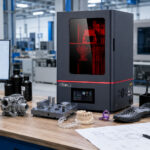
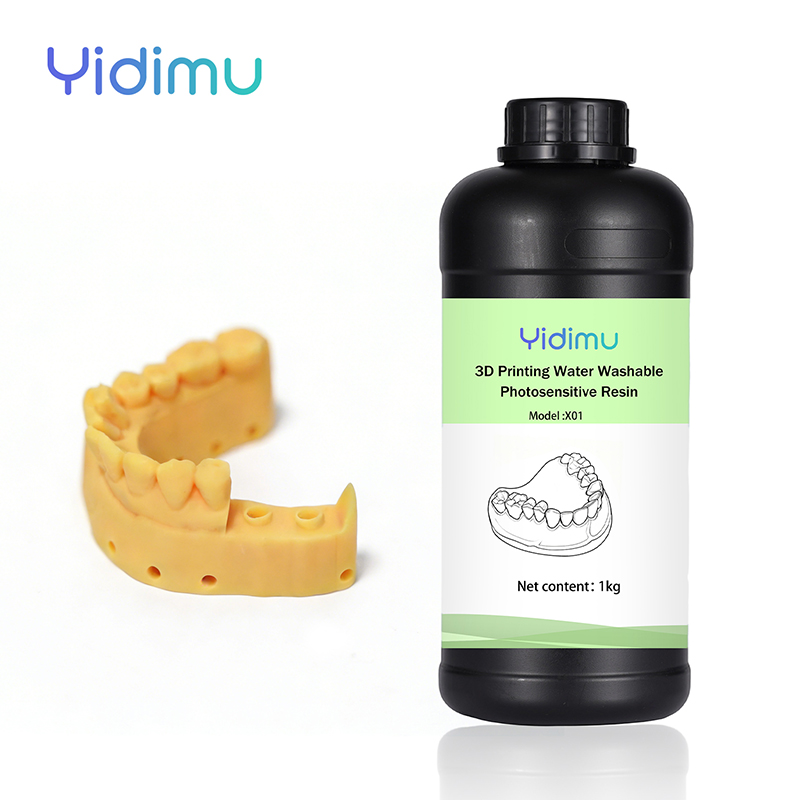
Water-washable resin 3D printing is popular because it solves a practical workflow problem: cleaning printed resin parts. In many resin 3D printing processes, printed parts must be washed with isopropyl alcohol or another cleaning solvent before final UV curing. Water-washable resin is formulated so that uncured surface resin can generally be removed with water, making the cleaning step more convenient for many workshops.
For professional users, the value is not only “wash with water.” The real value is workflow control. A dental lab may need a repeatable process for dental model cleaning. A factory may need faster handling for prototype samples. A model-making company may want less dependence on large volumes of alcohol. A research team may need a simpler process for frequent sample iteration.
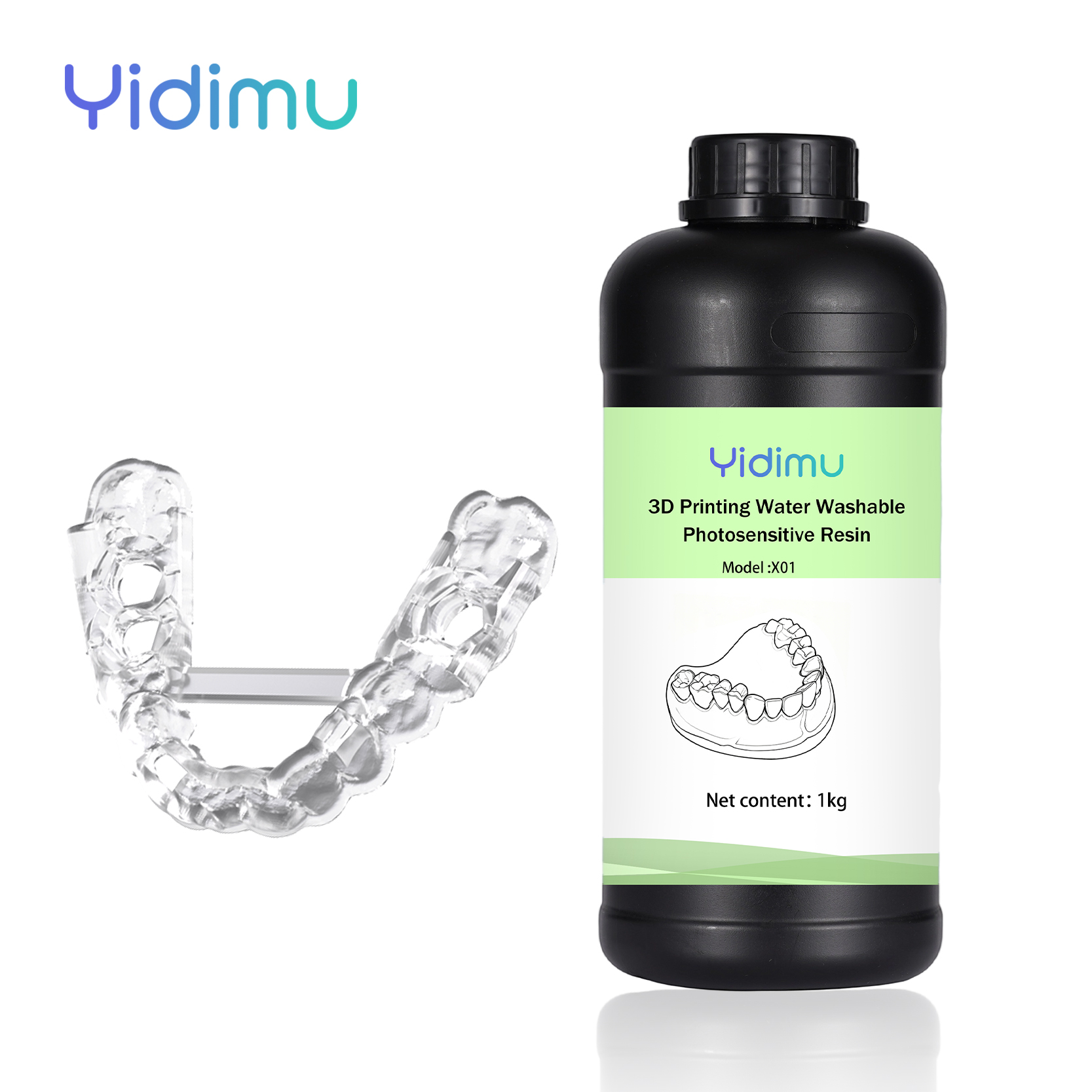
However, water-washable resin still belongs to the wider category of UV-curable photopolymer resin. It should be handled as a chemical material before it is fully cleaned and cured. Operators should review the resin SDS, wear suitable protective equipment, avoid skin contact with uncured resin and confirm wastewater handling rules before building a production workflow.
What Is Water-Washable Resin?
Water-washable resin is a UV-curable 3D printing resin designed to be cleaned with water after printing. It is commonly used in LCD, MSLA, DLP or SLA resin printing workflows, depending on resin wavelength compatibility and printer requirements.
In a typical resin printing workflow, the printer cures liquid resin layer by layer using UV light. After the print is finished, the surface of the part usually carries uncured or partially cured resin. This residue must be removed before final post-curing. Water-washable resin allows users to clean that surface residue with water under controlled conditions.
This does not mean the resin is harmless or drain-safe. The wash water becomes contaminated with uncured resin residue. It should be handled according to the resin supplier’s SDS, local regulations and internal workshop safety rules.
When Water-Washable Resin Makes Sense
Water-washable resin can be useful when the main production need is a cleaner, simpler and more manageable post-processing process.
It may be a practical choice for:
- Dental model printing
- Orthodontic study models
- Industrial appearance prototypes
- Product design samples
- Engineering review models
- Display models
- Educational models
- Research samples
- Model-making workflows
- Non-critical fit-check parts
For professional users, water-washable resin is often selected when the printed part does not require high heat resistance, special flexibility, certified biocompatibility or specific end-use mechanical performance. It is better viewed as a workflow-friendly resin option rather than a universal replacement for all engineering, dental or specialty resins.
Key Benefits of Water-Washable Resin
1. Easier Cleaning Workflow
The most obvious benefit is simplified cleaning. Instead of preparing alcohol tanks, storing solvent and managing solvent evaporation, many users can clean parts with water. This may make daily operation easier for clinics, labs and prototype teams that print frequently.
For small and medium production environments, this can reduce workflow friction. Operators may find it easier to train new staff, standardize cleaning steps and maintain a cleaner post-processing area.
2. Reduced Dependence on Alcohol
Traditional resin cleaning often depends on isopropyl alcohol. Alcohol storage, odor, flammability considerations, replacement frequency and disposal can become operational issues. Water-washable resin can reduce dependence on alcohol-based cleaning.
This does not remove the need for waste management. It simply changes the cleaning medium. Contaminated water still needs to be collected, treated or disposed of properly according to local requirements.
3. Suitable for Frequent Model Production
Water-washable resin can support frequent model production when the workflow is properly validated. Dental labs, product design teams and model-making workshops may print multiple models per day. A simpler washing step can improve handling efficiency.
This is especially useful when the main output is visual evaluation, model review, shape confirmation or non-critical sample production.
4. Good for Detail-Oriented Model Work
Depending on printer resolution, resin formulation, exposure settings and curing process, water-washable resin can support detailed model surfaces. It may be useful for dental arches, product appearance samples, figurative models, industrial design prototypes and complex geometry samples.
Surface quality should always be evaluated through sample printing before batch use. Cleaning time, support removal, curing time and storage conditions can all affect the final result.
5. Easier Training for New Operators
Professional resin printing involves multiple steps: slicing, support design, printing, draining, washing, drying, post-curing and inspection. Water-washable resin can make one part of this workflow easier to explain and repeat.
For new resin printing teams, this can reduce the learning burden. However, operators still need training in chemical handling, PPE, resin storage, spill control, UV curing and waste handling.
Practical Table: Water-Washable Resin vs Standard Alcohol-Wash Resin
| Comparison Point | Water-Washable Resin | Standard Alcohol-Wash Resin | Professional Selection Note |
|---|---|---|---|
| Cleaning medium | Usually cleaned with water | Usually cleaned with alcohol or approved solvent | Water washing may simplify daily operation, but wastewater must still be controlled |
| Workflow convenience | Often easier for routine model cleaning | Requires solvent storage and replacement | Water-washable resin may suit clinics, labs and model shops with frequent prints |
| Surface finish | Can be smooth depending on resin, printer and cleaning | Can also be smooth with correct washing | Validate with sample prints before production |
| Mechanical properties | Depends strongly on formulation | Wide range of general and engineering options | Do not assume water-washable resin is stronger or weaker without datasheet testing |
| Dental use | Only suitable when indication and documentation confirm the intended use | Dental-specific resins may be available for different applications | Customers should confirm resin indication, post-curing process and local regulatory requirements before clinical or intraoral use |
| Waste handling | Contaminated water must be handled carefully | Contaminated alcohol must be handled carefully | “Water-washable” does not mean drain-safe |
| Best use cases | Models, prototypes, visual samples, non-critical parts | General resin printing, specialty materials, engineering resins | Choose based on final use, not only cleaning convenience |
| Buyer concern | Wastewater control and final cured performance | Solvent handling and cleaning consistency | Both require PPE, SDS review and workflow validation |
Application Guide for Professional Users
Dental Clinics and Dental Labs
Water-washable resin may support dental model workflows when the resin is intended for that use and the process is properly validated. Common model-based applications may include study models, orthodontic models, diagnostic communication models or crown and bridge model support, depending on the resin and workflow.
For any dental-related use, the resin indication matters. A resin suitable for dental models is not automatically suitable for surgical guides, temporary crowns, splints, dentures or intraoral appliances. Customers should confirm resin indication, post-curing process and local regulatory requirements before clinical or intraoral use.
Model-Making Companies
Model-making teams often care about surface quality, detail visibility, ease of sanding, paintability and stable repeat results. Water-washable resin can be useful for display models, prototype samples, visual models and complex shapes.
Before committing to production, model shops should test:
- Fine details
- Thin walls
- Support marks
- Paint adhesion
- Post-cure color change
- Dimensional stability after cleaning and curing
Factories and Product Development Teams
Factories and R&D teams may use water-washable resin for concept models, assembly review, appearance samples and low-volume prototype verification. It can help teams move faster from CAD design to physical sample review.
However, water-washable resin should not be selected only because it is easy to clean. For functional parts, buyers should review strength, heat resistance, flexibility, impact behavior, shrinkage and long-term stability. Some applications may need ABS-like resin, flexible resin, high-temperature resin or other specialty materials.
Research Centers and Education Users
Research and education users may benefit from a simplified washing process, especially when many users share equipment. Water-washable resin can make training easier, but institutions should still define clear operating rules.
A controlled lab workflow should include PPE, labeled wash containers, UV curing settings, resin storage rules, spill control and waste documentation.
Workflow or Checklist: How to Process Water-Washable Resin Prints
Step-by-Step Post-Processing Workflow
- Prepare the work area
Wear suitable gloves, eye protection and protective clothing. Cover the work surface and prepare labeled wash containers before removing the print. - Remove the build platform carefully
Let excess resin drain back into the vat where appropriate. Avoid dripping uncured resin onto the printer or workbench. - Remove the printed part
Use the proper scraper or removal tool. Avoid bending thin models or damaging model edges. - First wash
Place the part into the first water container and agitate gently. The goal is to remove most uncured surface resin. - Second wash
Use a cleaner second container for final rinsing. This helps reduce sticky surfaces and improves post-cure consistency. - Inspect the part before curing
Check internal cavities, grooves, holes and support areas. Residue trapped in these areas may affect surface quality. - Dry the part completely
Allow the model to dry before UV curing. Water left on the surface or inside cavities may affect curing consistency and final appearance. - Remove supports when appropriate
Depending on the resin and model geometry, supports may be removed before or after curing. Validate the best method for your application. - UV post-cure according to the resin instructions
Use a suitable UV curing box and follow the resin supplier’s recommended time, wavelength and curing conditions. - Final inspection
Check surface feel, dimensional fit, cracks, deformation, color, support marks and application-specific requirements. - Handle wastewater correctly
Do not pour contaminated wash water directly into drains unless local rules and resin documentation clearly allow it. Collect and manage it according to SDS and local waste requirements.
Buyer Checklist: What to Confirm Before Choosing Water-Washable Resin
Before choosing water-washable resin for a professional workflow, confirm the following:
- Printer compatibility, including wavelength and exposure range
- Resin application: dental model, industrial model, prototype, display model or other use
- Required surface finish
- Required dimensional tolerance
- Required strength, flexibility or heat resistance
- Cleaning method and wash time
- UV curing wavelength and curing time
- Wastewater handling method
- SDS and technical datasheet availability
- Storage temperature and shelf-life guidance
- Batch consistency requirements
- Local regulatory requirements for dental or medical-related applications
- Whether the resin is for model use only or for a certified clinical indication
Post-Processing Notes for Better Results
Use Two Wash Containers
A two-stage wash process usually gives more consistent results than one container. The first container removes most resin residue. The second container provides a cleaner rinse. This helps reduce sticky surfaces and resin film.
For high-detail models, replace or treat wash water before it becomes too contaminated. Dirty wash water can redeposit resin onto the model surface.
Avoid Over-Washing Thin Parts
Water-washable resin parts may absorb moisture or become more fragile if washed too aggressively or left in water for too long, depending on the formulation. Thin walls, small pins and delicate dental model features should be handled carefully.
Use the resin supplier’s guidance as the starting point, then validate cleaning time with real models.
Dry Before UV Curing
Drying is a critical step. Water trapped in holes, cavities or grooves can affect final curing and surface quality. Compressed air, careful draining or controlled air drying may help, depending on the part geometry.
Do not cure models while water remains pooled inside internal structures.
Control UV Curing Time
Post-curing affects final hardness, surface feel and stability. Under-curing may leave parts weak or tacky. Over-curing may increase brittleness or cause deformation in thin structures, depending on resin type.
Professional users should document curing time, curing box model, part orientation and batch results.
Validate Support Removal Timing
Some parts are easier to remove from supports before final curing. Others may chip or deform if support removal is done too early. For dental models and industrial appearance samples, support mark control is important.
Test support strategy with the actual printer, resin and model geometry.
Common Problems and Troubleshooting Table
| Problem | Possible Cause | What to Check | Practical Fix |
| Sticky surface after cleaning | Wash water too contaminated, insufficient washing or incomplete curing | Wash time, water condition, drying and curing settings | Use two-stage washing, dry fully and confirm curing time |
| White marks or cloudy surface | Water residue, over-washing, trapped liquid or curing issue | Drying process and model geometry | Dry more thoroughly before curing and avoid excessive soaking |
| Cracking after curing | Thin wall design, over-curing, resin brittleness or stress from supports | Wall thickness, curing time, support placement | Reduce curing stress, adjust supports and validate wall thickness |
| Poor fit or dimensional deviation | Exposure settings, shrinkage, curing process or over-cleaning | Printer calibration, exposure, support strategy and post-cure process | Run calibration tests and document workflow settings |
| Detail loss | Overexposure, aggressive washing or poor support design | Exposure settings and cleaning method | Adjust exposure and clean gently |
| Strong odor or irritation | Poor ventilation or unsafe handling | SDS, PPE and workspace ventilation | Improve PPE, handling and workspace controls |
| Wastewater buildup | No waste plan before production | Local rules and internal waste process | Set up labeled containers and disposal procedure before batch printing |
Limits of Water-Washable Resin
It Is Not Automatically Safer
Water-washable resin can reduce alcohol use, but uncured resin still requires careful handling. Operators should avoid skin contact, use protective equipment and follow the resin SDS.
The word “water-washable” describes the cleaning method. It should not be interpreted as “non-toxic,” “skin-safe” or “safe for drains.”
It May Not Replace Engineering Resin
For load-bearing, high-temperature, impact-resistant or flexible parts, a general water-washable resin may not be the right material. Engineering applications should be evaluated based on datasheet values, sample tests and real-use conditions.
For example, a factory making fixture prototypes may use water-washable resin for appearance and fit review. But if the part must handle repeated mechanical stress, a different resin may be more suitable.
It May Not Be Suitable for Every Dental Application
Dental workflows have different material requirements. A dental model resin is not the same as a surgical guide resin or temporary crown resin. A resin used around patients or inside the mouth may require specific documentation, validated post-curing and local regulatory compliance.
Customers should confirm resin indication, post-curing process and local regulatory requirements before clinical or intraoral use.
Wastewater Still Requires Management
The water used to wash resin prints contains uncured resin residue. It should be collected and handled carefully. Some workshops allow resin particles to settle, cure residue with UV light and follow local disposal procedures. The correct method depends on resin composition, local rules and waste-management requirements.
Professional users should define this process before production begins.
Common Mistakes to Avoid
Mistake 1: Treating Wash Water as Normal Water
This is one of the most important mistakes. Wash water used for resin cleaning is contaminated. It should not be treated like ordinary cleaning water.
Mistake 2: Choosing Resin Only for Cleaning Convenience
Cleaning is important, but the final application matters more. Always check the resin’s intended use, mechanical behavior, surface finish and curing requirements.
Mistake 3: Skipping the SDS
The safety data sheet is part of the workflow. It helps operators understand handling, storage, PPE and disposal requirements.
Mistake 4: Using One Dirty Wash Container for Too Long
Dirty wash water can leave residue on parts and create sticky surfaces. A two-stage wash process is usually more stable for professional work.
Mistake 5: Curing Before the Part Is Dry
Curing wet parts can lead to surface defects, cloudy marks or inconsistent results. Drying should be part of the documented process.
Mistake 6: Assuming Dental Model Resin Is Intraoral Resin
Dental model use and intraoral use are different. Do not use a material for clinical or intraoral applications unless the resin indication, documentation and regulatory status support that use.
Mistake 7: Ignoring Printer Settings
Water-washable resin still needs correct exposure settings, lift speed, support design and layer height. A resin that works well on one printer may need adjustment on another printer.
How to Choose a Water-Washable Resin for Professional Use
Start with the Application
Define whether the resin will be used for dental models, industrial prototypes, product samples, display models, education models or research parts. The application determines what matters most.
For dental models, accuracy and surface detail may be the priority. For product samples, appearance and handling strength may matter more. For factory prototypes, dimensional repeatability and fit may be important.
Check Printer Compatibility
Confirm whether the resin works with your printer type and wavelength. Many resin printers use 405 nm UV light, but users should confirm compatibility instead of assuming.
Also check build size, light uniformity, exposure range and slicing settings.
Review Cleaning and Curing Requirements
A resin is only useful if the post-processing workflow fits your production environment. Ask how long the part should be washed, how it should be dried, what UV curing box is recommended and how curing affects the final part.
Request Sample Testing When Needed
For professional use, sample testing is often the safest way to evaluate resin performance. Test your real model, not only a generic sample part. Use the same printer, layer height, support strategy and curing process you plan to use in production.
Consider Total Workflow Cost
Water-washable resin may reduce alcohol consumption, but users still need containers, PPE, curing equipment, waste handling and operator time. Compare the complete workflow, not only resin price.
Where Yidimu Fits in the Workflow
Yidimu provides industrial resin 3D printers, dental 3D printers, flexible resin 3D printers, UV curing boxes, 3D printing resins and workflow support for professional users.
For customers considering water washable resin 3D printing, Yidimu can help review:
- Model size
- Printer selection
- Resin requirement
- Surface finish expectations
- Dental or industrial application
- Post-processing workflow
- UV curing setup
- Sample printing needs
- Production frequency
- Troubleshooting concerns
The best resin choice depends on the complete workflow. A stable result usually comes from matching printer, resin, slicing parameters, cleaning method, curing process and final application.
FAQ
Is water-washable resin safe to wash in the sink?
No. Water-washable resin can usually be cleaned with water, but the used wash water contains uncured resin residue. It should not be poured directly into drains unless the resin documentation and local rules clearly allow it. Professional users should collect and handle contaminated wash water according to SDS and local waste requirements.
Is water-washable resin better than normal resin?
Not always. It can be easier to clean and may reduce alcohol use, but it is not automatically stronger, safer or more accurate. The better choice depends on the application, printer, surface requirement, curing process and final use.
Can water-washable resin be used for dental models?
It may be used for dental models when the resin is intended for that application and the workflow is validated. Customers should confirm resin indication, post-curing process and local regulatory requirements before clinical or intraoral use.
Does water-washable resin still need UV curing?
Yes. In most resin 3D printing workflows, printed parts need cleaning and UV post-curing. The exact curing time and conditions depend on the resin, part size, curing box and application.
Why are my water-washable resin prints sticky after washing?
Sticky surfaces may come from dirty wash water, insufficient cleaning, incomplete drying, under-curing or incorrect exposure settings. Use a two-stage wash, dry the part fully and confirm curing settings.
Can I use water-washable resin for functional parts?
It depends on the resin formulation and the functional requirement. Some parts may be suitable for fit checks or light handling, but load-bearing, heat-resistant or impact-resistant parts may require engineering resin. Review the datasheet and test the actual part before use.
Does water-washable resin smell less than standard resin?
Odor depends on the resin formulation, printer environment and ventilation. Water-washable resin may reduce alcohol odor during cleaning, but uncured resin still needs careful handling and adequate workspace controls.
How long should I wash water-washable resin prints?
Washing time depends on resin type, model geometry, surface detail and contamination level of the wash water. Follow the resin supplier’s instructions first, then validate the process with your own models.
Can water-washable resin prints crack?
They can crack if the part is thin, over-cured, poorly supported, washed too aggressively or exposed to stress during post-processing. Adjust wall thickness, supports, washing time and curing settings.
Do I need a curing box for water-washable resin?
For professional workflows, a UV curing box is strongly recommended because it helps control curing time, UV exposure and repeatability. Sunlight curing may be inconsistent for production use.
Optional References
- Photopolymer Additive Manufacturing Alliance / RadTech: Proper handling guidance for UV-curable 3D printing resins
- ISO/ASTM 52900: Additive manufacturing terminology and fundamentals
- U.S. FDA: Technical considerations for additive manufactured medical devices
- Yidimu product and technical pages for resin 3D printing equipment, resins and workflow support
Conclusion
Water washable resin 3D printing can be a practical choice for dental model production, industrial prototypes, product design samples and professional model-making workflows. Its main advantage is easier cleaning, especially for users who want to reduce dependence on alcohol-based washing. However, water-washable resin still requires safe handling, controlled cleaning, proper drying, UV post-curing and responsible wastewater management.
For factories, dental clinics, dental labs, model-making companies and research teams, the right decision should be based on the full workflow rather than cleaning convenience alone. Customers should confirm printer compatibility, resin indication, post-curing requirements, final part expectations and local regulatory requirements.
To discuss a suitable Yidimu resin 3D printing workflow, contact Yidimu with your model size, resin requirement, application, expected workflow and any available 3D file or sample image. Yidimu can help review suitable printer, resin, UV curing and post-processing options for your project.