A dental 3D printer for clinics and labs should be chosen by application fit first: what you want to print, which resin indication is required, how many parts you need per day, and how the printer fits into scanning, software, washing, and post-curing. For clinics, ease of use, footprint, validated workflows, and predictable turnaround often matter most. For labs, batch stability, build capacity, resin flexibility, repeatability, and service support usually matter more. ADA buying guidance, FDA technical guidance, and Yidimu’s dental workflow pages all point to the same conclusion: do not evaluate a dental printer by resolution alone.
Why this keyword matters
When someone searches for a dental 3D printer for clinics and labs, they are usually close to a purchase or shortlist decision. They want to know which factors affect output quality, daily workflow stability, resin fit, and long-term operating cost. That matches the way the ADA approaches printer selection: intended use, technology type, software compatibility, post-processing, price, time, training, and workflow readiness.
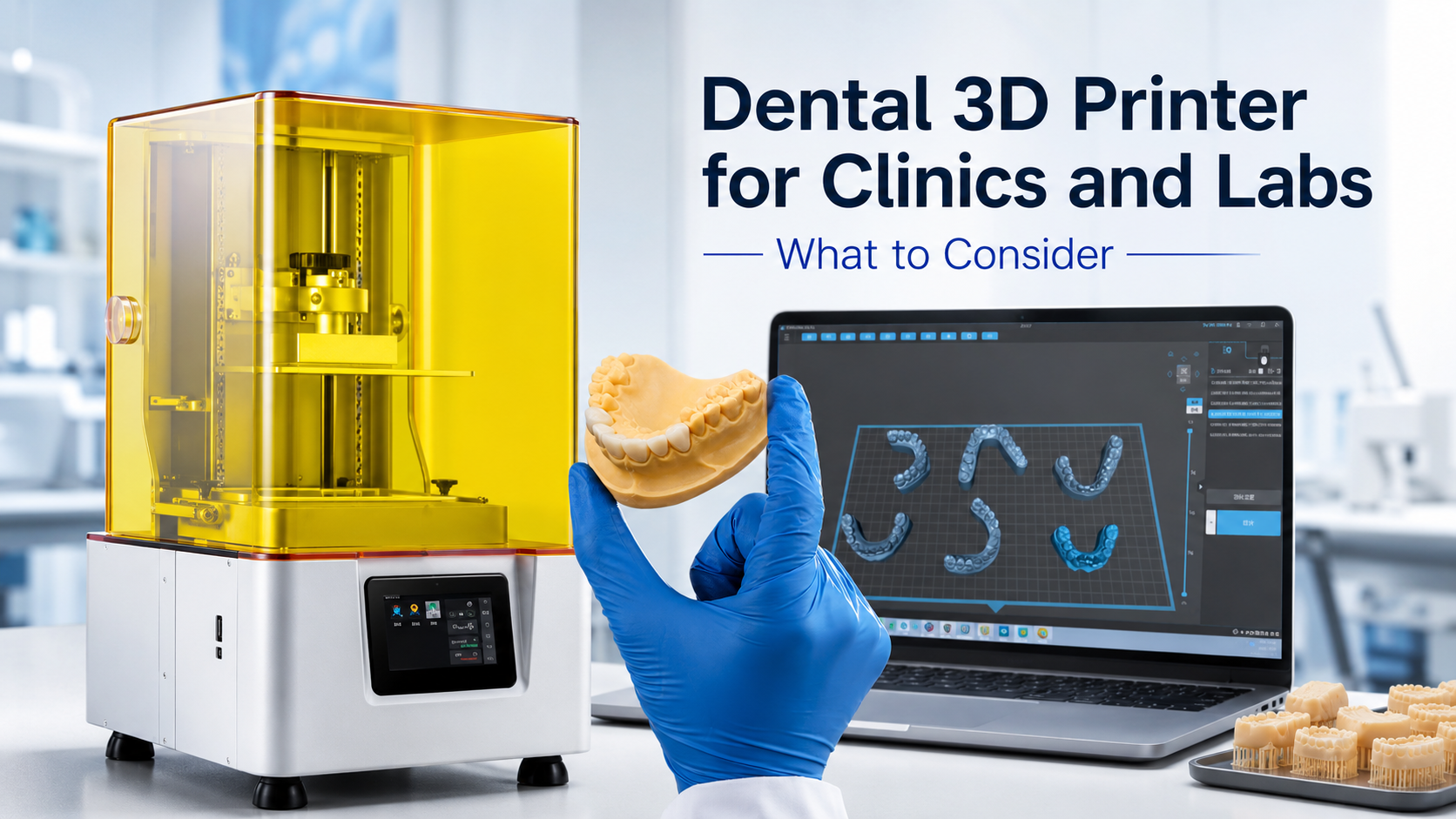
That search intent also reflects how professional dental printing is actually used. The ADA notes that 3D printers in dental practice are commonly adopted to complement other digital technologies, control workflows, improve efficiency, and reduce cost or manufacturing time. Yidimu’s dental content similarly frames dental printing as a workflow question, not just a machine question.
Start with the application, not the printer spec sheet
The most useful first question is not “Which printer has the highest resolution?” It is “What am I trying to produce, with which resin, in what quantity, and under which process controls?” The ADA makes the same point directly: the central question is what the buyer is trying to accomplish, and the purchase decision should begin with intended use and capability.
For dental workflows, intended use may include diagnostic models, orthodontic models, crown and bridge models, implant planning models, surgical guide workflows, bite-related appliances, removable denture workflows, or temporary restorations, depending on the printer-resin combination and the post-processing route. ADA guidance lists diagnostic models, surgical guides, night guards, crowns, temporary veneers, dentures, orthodontic appliances, and custom trays among relevant dental applications, while Yidimu’s dental product pages describe support for models, crown and bridge workflows, orthodontic applications, implant models, removable dentures, surgical guide workflows, and temporary-teeth workflows when suitable resins and validated post-processing are used.
This matters because the printer is only one part of the manufacturing process. The FDA states that its additive manufacturing guidance focuses on technical considerations, testing, and characterization for devices that include additively manufactured components, and the TGA likewise says 3D printers intended to make medical devices are considered part of the overall manufacturing process rather than independently regulated devices for that purpose.
What clinics usually prioritize
Operationally, clinics often prioritize a compact footprint, easier operator training, straightforward file transfer, fast turnaround on lower daily volumes, and a workflow that can be managed without adding too many manual steps. ADA buying guidance highlights questions about software readiness, staff willingness to adopt the workflow, outsourcing versus in-house capacity, and the time required for printing, curing, finishing, training, and IT updates. Yidimu’s Y8 dental printer page also positions a smaller-footprint dental system for clinics and digital dentistry centers that need convenient daily operation.
For a clinic, “good enough every day” may be more valuable than the most aggressive spec on paper. A system that supports the clinic’s scanner-to-design-to-print flow, is easy to maintain, and has clear wash and cure procedures may reduce delays better than a machine that looks stronger in isolation but is harder to run consistently. ADA workflow guidance and FDA/TGA process-focused guidance both support evaluating the full production path rather than printer hardware alone.
What labs usually prioritize
Labs usually operate under different pressure. They tend to care more about batch output, dimensional consistency across repeated jobs, platform utilization, resin management, production scheduling, and support for multiple dental case types. ADA guidance specifically calls out build platform size, printing accuracy and capacity per material and prosthesis, different resin types for different products, and the time required for fabrication and curing. Yidimu’s dental-lab article makes the same point by asking buyers to define model size, daily quantity, resin type, and support needs before choosing a machine.
That is why labs often evaluate printers as part of a production cell: printer, resin, washing, curing, file preparation, parameter control, and service response. Yidimu’s about page explicitly states that reliable results depend on coordination among hardware, resin materials, printing parameters, post-curing equipment, file preparation, and technical support.
The core factors professional buyers should evaluate
Application fit and resin indication. Different dental products require different resin types, and some applications may involve biocompatibility or local regulatory questions. ADA guidance says different products require different resins and advises buyers to research materials for composition and safety compliance. Customers should confirm resin indication, post-curing process and local regulatory requirements before clinical or intraoral use. Official guidance from the FDA, the European Commission, and the TGA all reinforces that device oversight depends on intended use, applicable medical-device rules, and the safety and effectiveness of the overall process.
Build size and batch strategy. Platform size matters because it affects how many arches, models, trays, or guide-related parts you can run in one cycle. ADA explicitly lists build-platform size as a buying consideration tied to the volume and type of products being printed. Yidimu’s Y8 dental printer, for example, is positioned as a compact system with a practical dental build volume rather than as a large-format production machine.
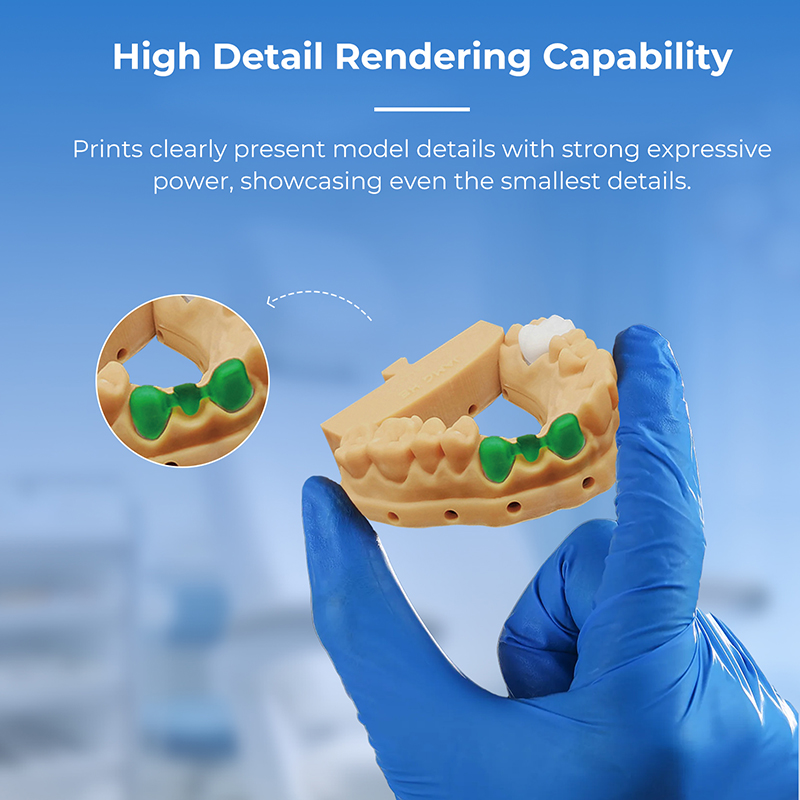
Repeatability, not just nominal resolution. Resolution is useful, but production users usually care more about repeatable output, light uniformity, fit with validated parameters, and post-processing stability. ADA guidance warns buyers not to judge quality only by a sample print or a quick demo. Yidimu’s dental pages also emphasize stable batch printing and repeatable workflow control for dental models.
Software and file-path compatibility. Your actual production chain often begins before printing. ADA recommends checking whether computers can handle the software, whether additional software is needed, whether cloud or CAD compatibility is sufficient, and whether the digital record is already integrated into the workflow. Its appendix also outlines a five-step digital workflow: scan, design, print, process, deliver.
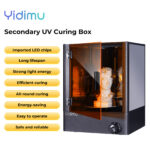
Post-processing capability. Washing and curing are not optional afterthoughts. ADA specifically lists additional equipment such as washing and curing units among printer-type considerations, and states that total time should include curing, finishing, and polishing. Yidimu’s UV curing box pages likewise position post-curing as essential to final usability and practical performance.
Validation and process control. The FDA’s additive manufacturing guidance is centered on technical considerations, testing, and characterization, and its point-of-care discussion paper says the capabilities of the 3D printing facility factor into device safety and effectiveness. The TGA also requires manufacturers of 3D-printed medical devices to understand and describe material properties and processing requirements to minimize risks. If you are evaluating equipment for regulated or intraoral use, you should ask not only “Can the printer make this part?” but also “Can this workflow be documented, repeated, and confirmed for my use case?”
Service, troubleshooting, and onboarding. Professional buyers should verify what help is available after installation: manuals, software, troubleshooting, spare parts, application guidance, and sample testing. Yidimu’s site includes support sections for troubleshooting, software, manuals, and models, and its dental-lab article says support may include printer selection, resin matching, parameter guidance, sample testing, cleaning and curing suggestions, and troubleshooting.
Where Yidimu may fit
Yidimu is relevant for this keyword because its site is structured around professional resin printing rather than hobby use. The company presents industrial LCD and SLA printers, dental printers, resin materials, UV curing equipment, scanners, and workflow support for prototyping, dental models, and other production scenarios. Its dental pages describe solutions for dental labs, clinics, denture-processing facilities, and digital dentistry centers, while its dental resin and curing pages address daily model printing and post-curing needs.
For buyers comparing options, that matters because a professional dental printing purchase is often less about finding one “best” machine and more about matching the right printer, resin, post-curing route, and support level to the exact workflow. Yidimu’s own dental article and product pages consistently frame the purchase decision this way.
Conclusion
The right dental 3D printer for clinics and labs is usually the one that fits the real workflow: application, resin requirement, output volume, post-curing route, software path, operator skill level, and validation needs. If you choose by headline resolution alone, you may miss the factors that actually affect throughput, remakes, and consistency. For professional users, a better buying process is to define the part, the resin, the daily load, and the post-processing method first, then match the printer to that process. If you want to discuss a project with Yidimu, send your model size, resin requirement, application, and expected workflow so the team can suggest a more suitable printer-and-material route.
Practical Table
| Buying factor | What a clinic should check | What a lab should check | Why it matters |
|---|---|---|---|
| Main application | Which cases will be printed in-house: models, guides, trays, splints, temporary work | Which case mix must run daily across multiple jobs and operators | Intended use determines resin choice, workflow, and whether validation requirements may become more demanding |
| Resin fit | Whether the required resin is available and suitable for the printer wavelength and workflow | Whether multiple resins can be managed without disrupting throughput | Different dental products require different resins; material selection is not interchangeable in every workflow |
| Build size | Whether the printer fits chairside or back-office space and still handles common daily cases | Whether the platform supports efficient batch nesting and queue planning | Platform size affects both footprint and output per cycle |
| Post-processing | Whether washing and curing can be done consistently by clinic staff | Whether post-processing can be standardized across batches and shifts | Final part performance can depend heavily on cleaning and curing |
| Software path | Whether scanner, CAD, slicing, and file transfer are practical for the team | Whether the pipeline supports production scheduling and repeatability | Workflow failures often begin before printing |
| Support and service | How fast training, troubleshooting, and replacement support are available | Whether the supplier can support parameter control, scaling, and repeat production | A professional printer needs operational support, not only specifications |
| Compliance risk | Whether the intended use stays within the confirmed resin indication and local rules | Whether the workflow can be documented and controlled for the products being supplied | Regulatory obligations depend on device type, intended use, and validated process controls |
This comparison is a practical synthesis of ADA purchasing guidance, FDA and TGA process-based regulatory guidance, and Yidimu’s dental workflow pages.
Workflow or Checklist
Short procurement workflow for a dental 3D printer project
- Define the output clearly. List exactly what you want to print first: diagnostic models, orthodontic models, surgical guide workflows, temporary work, trays, denture-related parts, or a narrower starting application. ADA guidance starts with intended use, and Yidimu’s dental content recommends defining the real application before choosing equipment.
- Confirm scan and design readiness. Check scanner sources, file formats, CAD tools, slicing steps, and whether your computers and team can support the workflow. ADA specifically asks buyers to confirm digital-record integration and software readiness.
- Estimate volume and part size. Count how many arches, models, guides, or appliance-related parts you expect per day or per batch. Then compare those needs with build size and batch strategy. ADA ties platform size and production time directly to ROI and workflow suitability.
- Match resin to application and printer. Confirm wavelength compatibility, material indication, color needs, hardness, and any application limits. Yidimu’s dental model resin page, for example, is positioned specifically for dental model workflows on 385–405 nm LCD/DLP systems rather than as a universal dental material.
- Plan washing and curing before purchase. Do not treat post-processing as an accessory decision. ADA includes washing and curing equipment in the buying checklist, and Yidimu’s curing pages present post-curing as part of the complete resin workflow.
- Request sample evaluation. For professional buying, a sample should be checked against your own files, target use, finishing route, and production expectations. Yidimu states that it can discuss sample testing, resin matching, and parameter guidance before selection.
- Review support, documentation, and local requirements. Confirm manuals, software access, troubleshooting, spare parts, and technical response. If a workflow may reach clinical or intraoral use, confirm resin indication, post-curing requirements, and local regulatory obligations before going live.
Fast buyer checklist
Before you buy, you should be able to answer yes to these questions:
- Do we know the first 2–3 applications this printer must support?
- Do we know which resin is required for each application?
- Do we know the daily volume and preferred batch size?
- Do we have a clear wash and cure procedure?
- Can our current scanner and software chain export the right files reliably?
- Have we reviewed service, training, and troubleshooting support?
- Have we confirmed resin indication and local requirements for any clinical or intraoral workflow?
Common Mistakes to Avoid
The most common buying mistake is choosing a printer by advertised resolution alone. ADA guidance and FDA process guidance both push buyers toward intended use, materials, software, post-processing, and validation instead.
Another frequent mistake is treating dental resin as a generic category. In reality, different applications may require different materials, and the same printer does not automatically make every dental part appropriate for every workflow. ADA explicitly says different products require different resin types.
A third mistake is underestimating post-processing. If washing and curing are inconsistent, final part usability and stability may change even when the print itself looks good. Yidimu’s curing-box page makes this practical point clearly, and ADA includes curing time and equipment in printer evaluation.
Many teams also overlook software and training. A fast printer will not solve bottlenecks caused by weak CAD handoff, file preparation errors, or limited operator readiness. ADA’s buying checklist repeatedly returns to software, IT, and staff adoption.
Finally, some buyers assume that if a printer can physically print a part, the workflow is automatically acceptable for clinical or intraoral use. That is too simplistic. Customers should confirm resin indication, post-curing process and local regulatory requirements before clinical or intraoral use. FDA, TGA, and EU guidance all point buyers back to intended use, process control, and applicable medical-device rules.
FAQ
Is a dental 3D printer for clinics and labs the same thing?
Not usually. Clinics and labs may use similar resin-printing technologies, but their priorities can differ. Clinics often emphasize footprint, usability, and turnaround for a narrower set of indications, while labs usually need more batch efficiency, platform utilization, and repeatability across a broader case mix. ADA buying guidance supports this distinction by separating workflow, time, build size, material, and resource questions.
What matters more: resolution or workflow stability?
For most professional buyers, workflow stability matters more. Resolution is relevant, but output quality also depends on material fit, software path, support strategy, cleaning, curing, and repeatable parameters. ADA and FDA guidance both support evaluating the full process rather than a single spec line.
Can one dental printer handle models, guides, and temporary restorations?
It may, depending on the printer, the resin, and the validated workflow. Yidimu’s dental pages indicate that some systems can support multiple dental applications when paired with suitable resins and correct post-processing, but buyers should not assume all indications are covered by default. Customers should confirm resin indication, post-curing process and local regulatory requirements before clinical or intraoral use.
Do clinics really need a separate curing unit?
In most resin workflows, yes. ADA lists washing and curing equipment as part of the system decision, and Yidimu’s UV curing pages describe post-curing as necessary to complete the curing process and improve final usability.
What should I send to a supplier before asking for a recommendation?
At minimum, send the intended application, model size or part dimensions, resin requirement, expected daily or weekly workflow, and whether the use is model-only or may involve clinical or intraoral steps. Yidimu’s dental article explicitly asks buyers to define application, model size, resin needs, and workflow when discussing a project.
Is an open material workflow always better than a closed one?
Not always. Open workflows may offer more flexibility, but they can also require more process discipline and buyer validation. ADA lists open versus closed systems as a factor to evaluate, not a universal ranking. The better choice depends on your application scope, internal capability, and need for control versus flexibility.
How should a lab test a new dental printer before purchase?
A practical test should use your own files and your intended parts, then review fit, surface detail, nesting efficiency, post-processing time, and repeatability across at least more than one build. Yidimu states that it can discuss sample testing, parameter guidance, and workflow suitability before selection, which is the right general approach for professional evaluation.