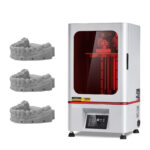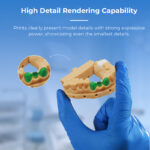
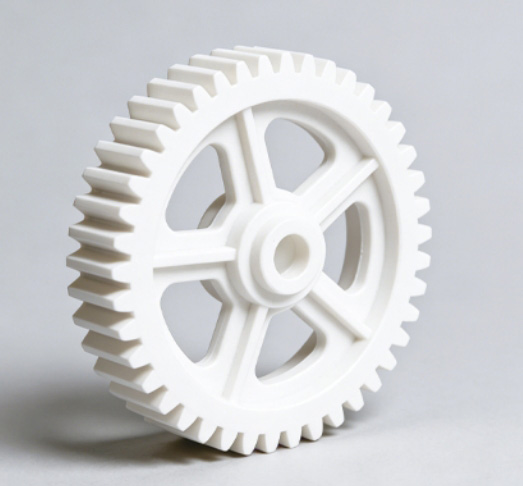
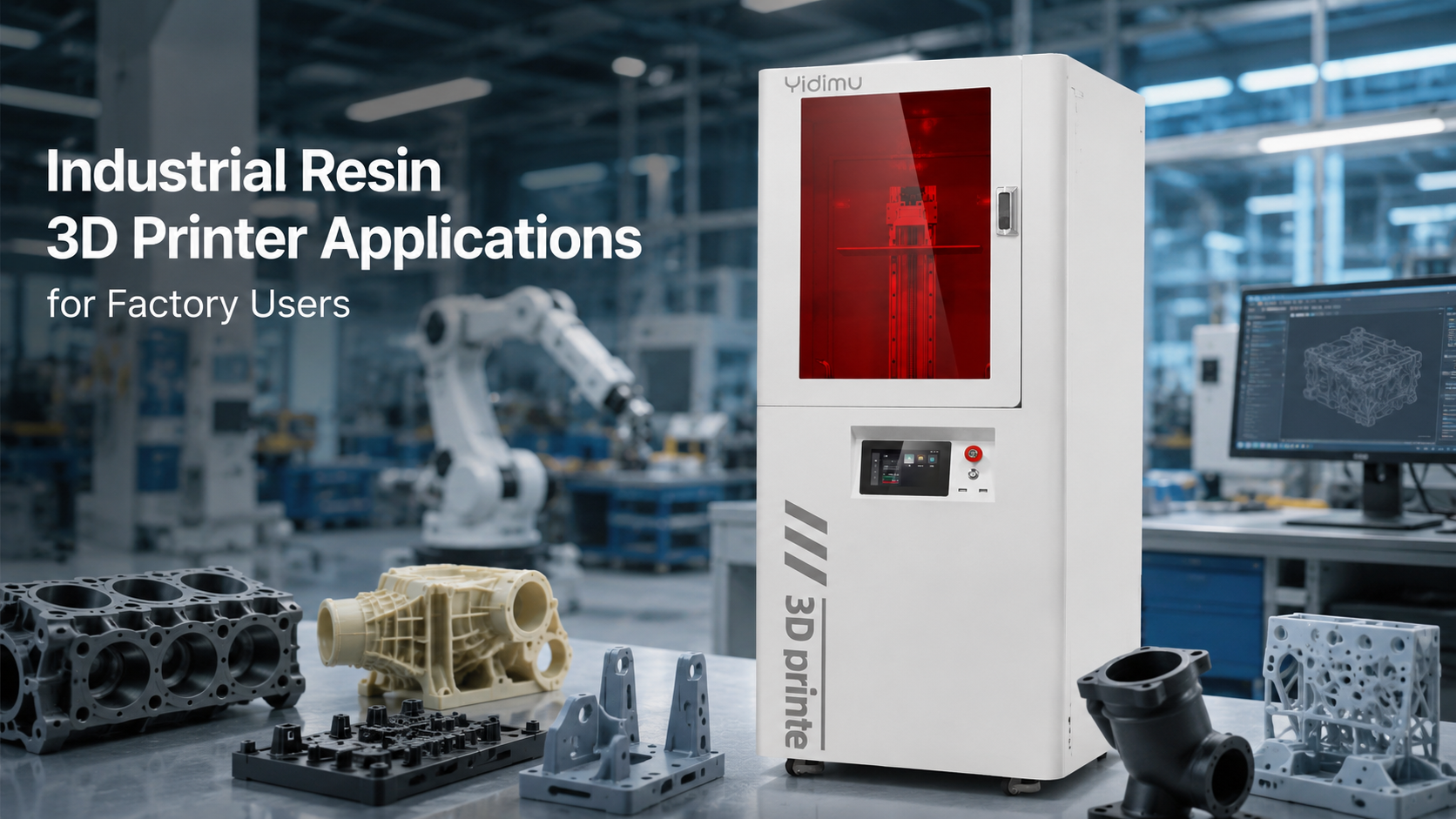
Industrial resin 3D printer applications for factory users usually include appearance prototypes, engineering samples, fit-check parts, dental models, casting patterns, flexible test parts, and short-run production samples. The technology is most valuable when teams need fine detail, smooth surfaces, complex geometry, or customized batch parts rather than very large structural components. In practice, good results usually depend on the full workflow: printer, resin, washing, post-curing, inspection, and parameter control. That is why professional buyers should start with the part requirement, resin requirement, and production workflow, not resolution alone.
The keyword industrial resin 3D printer applications usually signals a practical buying-stage question, not a textbook question. Most professional searchers are not asking what resin printing is in theory. They want to know where it fits in a real operation, what kinds of parts it can support, what workflow it requires, and whether it can reduce trial cost before tooling, outsourcing, or batch production. For Yidimu, that means the article should answer a factory manager, a dental lab owner, a model shop supervisor, or an R&D engineer who is comparing workflow value, not just machine specifications.
From a process standpoint, industrial resin printing belongs to the vat photopolymerization family. NIST describes vat photopolymerization as a process that forms structures by curing liquid photopolymer resin with ultraviolet light over multiple stages. That base process is why resin systems are often chosen for detailed surfaces, small features, and complex shapes that need to be checked quickly in physical form. At the same time, resin is not automatically the best choice for very large structural parts, very high-volume low-cost production, or applications that require heavy impact performance without a carefully matched material and process.
For factory and professional users, the most practical industrial resin 3D printer applications usually fall into a few repeatable groups:
- Appearance prototypes and customer-facing samples. Resin printing is often a strong fit for housings, covers, consumer product shells, visual mockups, and design review parts because the process can support fine surface detail and smooth exterior presentation. Yidimu positions its industrial prototyping workflow around appearance models, engineering samples, product design verification, and small-batch production trials.
- Engineering samples and assembly verification parts. A factory may use resin printing to review fit, spacing, alignment, labels, textures, mounting positions, and support interfaces before CNC revision or mold investment. FDA’s general AM process overview also reinforces that printing, post-processing, validation, and testing are separate but connected stages, which matches how engineering teams should treat prototype review parts.
- Dental model production and digital dental workflows. Yidimu’s dental pages show that resin systems can support dental models, crown and bridge model work, orthodontic models, implant models, and surgical guide-related workflows when they are paired with suitable dental materials and validated post-processing. This is one of the clearest professional application areas for resin technology because detail reproduction and repeatable daily output matter more than oversized build volume.
- Model-making, display models, and detailed master patterns. Model factories and design teams often need tall parts, texture-rich surfaces, and controlled presentation quality. Yidimu’s larger-format industrial platform is positioned for model production, visual prototypes, and larger sample parts with a 353 × 198 × 400 mm build volume and 8K resolution.
- Flexible or elastomeric prototype parts. Not every resin workflow is limited to rigid display parts. Yidimu’s Flex Pro is presented for 50A–90A flexible materials and applications such as footwear, rehabilitation devices, cushioning components, wearable parts, and flexible functional prototypes. For product development teams, that means resin printing may support faster iteration of soft structures, lattice concepts, and deformation-based samples before committing to traditional tooling.
- Short-run production support and pre-production batching. Professional resin printing can also support sample batches, low-volume customized parts, and trial production when size, output quantity, and post-processing are managed correctly. Yidimu’s selection guidance repeatedly frames professional resin printing as a workflow for repeatable output, not just one-off model making.
The main reason these applications work is not only print quality. It is workflow compression. A professional user can move from digital file to physical validation without waiting for outsourced sampling, soft tooling, or full mold timing. FDA’s process outline for additive manufacturing highlights the sequence of device design, software workflow, material controls, printing, post-processing, validation, and testing. Even outside regulated sectors, that sequence is a useful management model for factories: design the part, choose the material, print it, finish it correctly, verify it, then decide whether to scale, revise, or stop.
That also explains why experienced buyers do not choose equipment by pixel count alone. Yidimu’s own buyer guidance makes the same point clearly: a professional resin setup is a complete system that includes the printer, matched resin, slicing parameters, washing, UV curing, inspection, and technical support. In other words, an industrial machine purchase may underperform if the resin, post-cure, and inspection steps are treated as afterthoughts.
For selection, a useful rule is to start with the part and work backward.
First, define what the part must do. Is it a visual appearance model, a fit-check part, a dental production model, a casting pattern, a flexible sample, or a short-run production component? The answer changes everything: build size, resin type, exposure settings, curing equipment, and inspection focus. Yidimu’s industrial, dental, and flexible product pages show that professional applications split quickly into different machine and material priorities.
Second, check real usable size, not only nominal build volume. Supports, part orientation, nesting strategy, and post-processing capacity may reduce what is practical in daily use. Yidimu’s buyer guide specifically notes that usable space must account for support layout and whether the washing and curing equipment can handle the printed part size. This is especially important for larger housings, tall models, shoe samples, and multi-part dental batches.
Third, choose the resin before finalizing the printer. A rigid prototype resin, a dental model resin, a castable resin, and a flexible elastomer resin do not create the same process window or final part behavior. Yidimu’s dental resin page notes that actual exposure settings should be tested according to light intensity, optical structure, vat condition, and model design. That is exactly the kind of practical caution professional buyers need.
Fourth, treat post-processing as part of the qualification plan. FDA’s AM process guidance explicitly includes post-processing, process validation, and testing, while Yidimu’s UV curing box page states that post-curing helps printed parts complete curing and improve final usability. For professional operations, that means the printer should be evaluated together with washing, drying, curing, support removal, and final inspection.
Fifth, ask for sample testing on your real file. Yidimu states that it can support sample testing, resin matching, parameter guidance, and workflow recommendations based on the buyer’s actual application. That matters because a supplier demo part may print well, while your own geometry may reveal orientation risk, support marks, shrinkage sensitivity, or post-cure distortion.
Dental users should be even more careful. Yidimu’s dental printer pages describe model workflows, implant model workflows, and surgical guide-related uses, but FDA also makes clear that additive manufacturing for medical devices involves material controls, post-processing, validation, and testing. Customers should confirm resin indication, post-curing process and local regulatory requirements before clinical or intraoral use. No dental resin or workflow should be assumed appropriate for direct patient-related use simply because the printer itself can produce a detailed model.
Safety and handling also belong in the buying discussion. NIOSH notes that additive manufacturing can expose workers to safety and health hazards, and its hazard summary for vat photopolymerization lists inhalation of VOCs, dermal exposure to resins and solvents, and ultraviolet exposure among the concerns. For factory users, that does not mean resin printing is impractical. It means the workspace, operator routine, PPE, cleaning area, and uncured resin handling procedure should be planned from day one.
Practical Table
The table below is a practical selection view of common industrial resin 3D printer applications for professional users. It combines general vat photopolymerization process requirements with Yidimu’s current industrial, dental, flexible, resin, and post-curing pages.
| Application need | Why resin printing may fit | What the buyer should check | Example Yidimu fit |
|---|---|---|---|
| Appearance prototypes and visual product samples | Smooth surfaces, small text, textures, and presentation quality can often be reviewed faster in-house | Usable build volume, orientation, support marks, curing capacity, repeatability | Industrial Photocuring Resin 3D Printer for prototypes and small-batch sample manufacturing, with a 353 × 198 × 400 mm build size |
| Engineering samples and assembly checks | Good for form, fit, layout, and design verification before tooling decisions | Real tolerances, shrinkage control, post-cure effect on dimensions, inspection method | How to Choose a 3D Printer for Industrial Prototyping emphasizes design verification, repeatable testing, and workflow control |
| Dental models and lab workflows | Resin printing can support detailed arches, crown and bridge models, orthodontic models, and implant models | Resin indication, validated post-curing, local regulatory requirements, batch consistency | Y8 Dental Light-Curing 3D Printer plus Dental Grey Model Resin for routine dental model workflows |
| Surgical guide-related or temporary dental workflows | High detail can support guide-related or temporary workflows depending on resin and process | Process validation, manufacturer instructions, material controls, clinical restrictions | Y8 page mentions guide-related workflows only when paired with suitable dental resins and validated post-processing; FDA requires validation and testing for AM medical devices |
| Flexible sample parts, wearable components, cushioning structures | Useful for testing soft geometry, lattice concepts, and customized elastomer parts | Shore range, rebound behavior, post-cure routine, print orientation, batch stability | Yidimu Flex Pro for 50A–90A materials in footwear, rehabilitation devices, wearables, and soft components |
| Short-run customized parts and pre-production trials | Can support limited-volume runs when part size, labor, and finishing are manageable | Full cycle time, labor, resin use, curing bottlenecks, inspection criteria | Yidimu positions professional resin printing as a workflow for small-batch production and repeatable daily output |
Workflow or Checklist
Use this step-by-step workflow when evaluating whether a resin printer will actually work in your facility rather than only in a showroom.
- Define the application clearly. State whether the part is for appearance review, fit check, dental model production, flexible sample testing, casting, or small-batch output. This determines the right printer-resin-process chain.
- Confirm the maximum model size and batch size. Include supports, orientation, nesting, and the number of parts per run, not just single-part dimensions.
- Match the resin to the application. For example, standard rigid resin, dental model resin, or flexible elastomer resin may require different settings and post-processing.
- Check post-processing capacity before purchase. Washing and UV curing are not optional. The post-cure step affects final usability, and the curing space must match the actual printed part size.
- Run a real sample file. A stock demo is not enough. Ask the supplier to print one of your own parts and inspect detail, support marks, critical dimensions, and throughput on your actual geometry. Yidimu explicitly states it can support sample testing and workflow recommendations.
- Document the repeatable process. Record exposure settings, orientation rules, support logic, cleaning time, drying time, curing time, and inspection points so output does not depend entirely on one operator. FDA’s AM process model highlights material controls, post-processing, validation, and testing as separate control stages.
- Review safety controls for uncured resin handling. Plan ventilation, containment, PPE, and solvent handling in the same project review as printer selection. NIOSH identifies potential inhalation, dermal, solvent, and UV-related hazards in additive manufacturing, including vat photopolymerization.
- Scale only after repeatability is proven. If the first article looks good but the fifth batch drifts, the workflow is not production-ready yet. Professional resin printing succeeds when the process, not only the machine, is stable.
In day-to-day operations, the most valuable industrial resin 3D printer applications are usually the ones that reduce decision risk before tooling, speed up sample validation, or support a repeatable specialty workflow such as dental model production, flexible prototyping, or detailed appearance models. If you are evaluating a project now, contact Yidimu with your model size, resin requirement, application, and expected workflow. Yidimu’s own guidance asks buyers to provide the printing purpose, model size, accuracy requirements, material needs, and production expectations, and it states that sample testing and workflow recommendations may be available based on the application.
Common Mistakes to Avoid
- Choosing by resolution alone. High resolution does not guarantee stable output. Resin behavior, support strategy, cleaning, and curing also affect the final part.
- Ignoring usable size. A machine may have a large nominal build area, but supports, part orientation, and curing-space limits may reduce what is practical in production.
- Buying the printer before confirming the resin. Different resins change exposure settings, handling, and final application suitability.
- Treating washing and post-curing as accessories. Post-curing is part of the performance chain, not an optional add-on.
- Relying on supplier demo files only. A generic demo often hides the challenges in your own geometry, small features, and support-sensitive surfaces. Yidimu recommends sample testing based on the buyer’s application.
- Assuming dental suitability from printer capability alone. A printer may support dental workflows, but resin indication, post-curing, and local regulatory requirements still need confirmation before clinical or intraoral use.
- Underplanning safety controls. Uncured resin and solvent exposure should be managed with proper handling routines, PPE, and ventilation planning.
- Failing to document a standard process. If support design, cure time, and cleaning routine change from operator to operator, repeatability may suffer even when the machine itself is capable.
FAQ
What are the most common industrial resin 3D printer applications?
The most common professional uses are appearance prototypes, engineering samples, detailed design-verification parts, dental models, model-making masters, flexible sample parts, and low-volume trial parts. Resin printing is usually most attractive when the application values detail, smooth surfaces, and customization over very large structural size.
Is an industrial resin printer suitable for factory prototyping?
Yes, it can be suitable for factory prototyping when the parts are small to mid-sized, detail matters, and the team needs faster physical validation before tooling or production decisions. Yidimu’s industrial prototyping guidance specifically positions resin printing for design verification, engineering samples, and pre-production model work.
When should a factory choose resin instead of CNC or early mold making?
A factory should usually consider resin printing when it needs fast visual review, form and fit testing, complex geometry, or sample iteration without opening tooling too early. It may be less suitable when the main need is very high-volume low-cost production or large structural parts with demanding mechanical loads.
Can resin 3D printing support low-volume production?
It can support low-volume production or short-run customized parts depending on the part size, resin type, post-processing labor, and inspection requirements. The real limit is often the complete cycle time, not only print speed.
What should dental labs and clinics check before buying a resin printer?
They should check model size, batch capacity, printer stability, compatible dental resins, post-curing method, troubleshooting support, and whether the full workflow is repeatable day after day. Yidimu’s dental guidance stresses that dental printing depends on the combined workflow of printer, resin, software, curing, and support.
What should customers confirm before clinical or intraoral use?
Customers should confirm resin indication, post-curing process and local regulatory requirements before clinical or intraoral use. FDA guidance for additively manufactured medical devices emphasizes material controls, post-processing, validation, and testing, so body-contact use should never be assumed from printability alone.