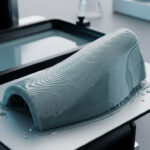
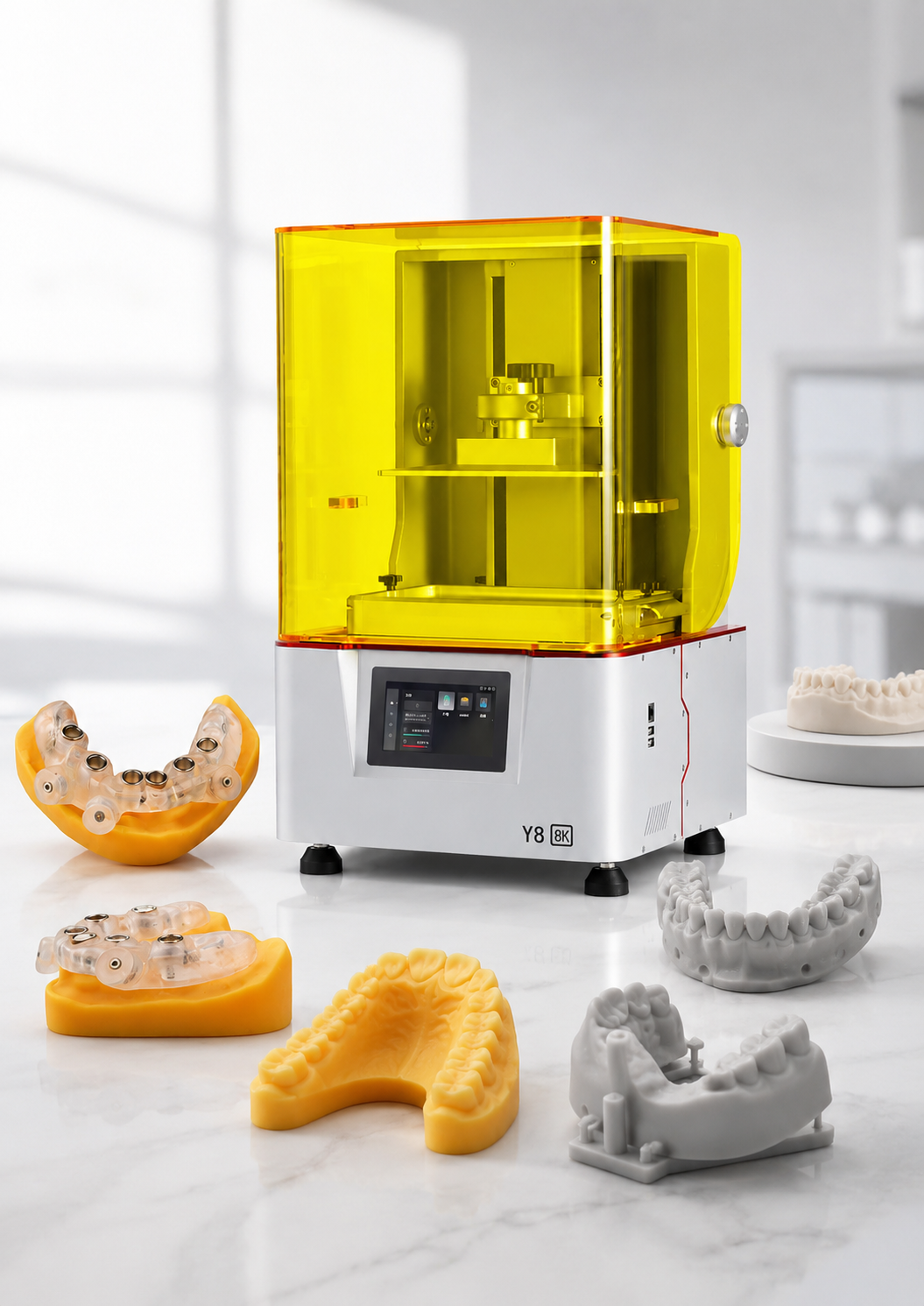
For a home user, a good 3D printer may simply mean affordable, easy to operate and capable of printing small decorative models. For a factory, dental lab or engineering team, the meaning is very different.
A good professional 3D printer should be judged by application fit. It should produce parts with stable dimensions, suitable surface finish, reliable repeatability and a workflow that your team can actually manage every day. In additive manufacturing, parts are produced by building material layer by layer from digital design data, which is why machine stability, material behavior and process control matter so much. ISO/ASTM 52900 defines additive manufacturing around the principle of creating 3D geometry by successive addition of material, while NIST describes 3D printing as a layer-by-layer method that can support complex designs and reduce waste compared with some traditional manufacturing routes.
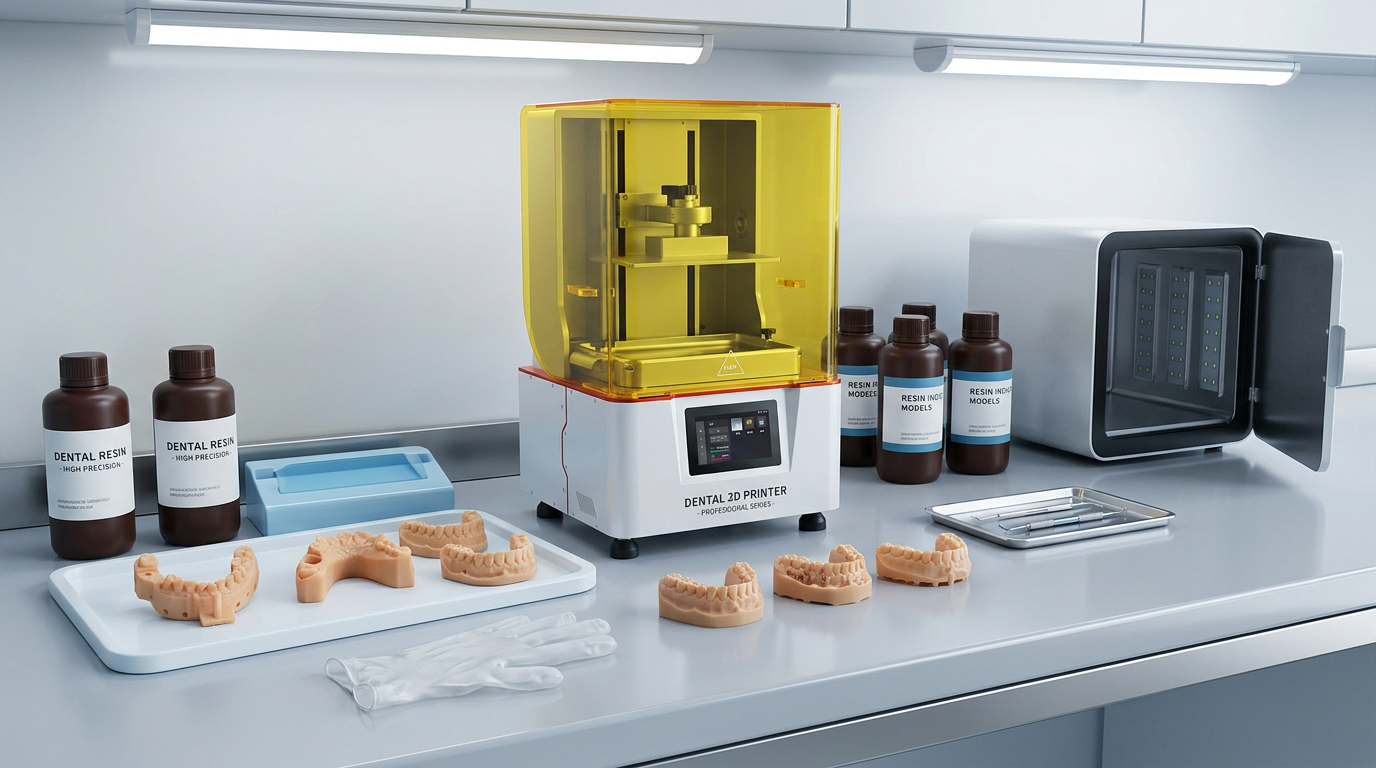
For Yidimu’s customers, a “good” 3D printer usually means one of these:
- A resin 3D printer for fine detail, smooth surfaces and accurate prototypes.
- A dental 3D printer for models, guides, splints or other dental workflows, depending on resin indication and local requirements.
- An industrial resin 3D printer for product development, small-batch trials, appearance models or functional samples.
- A flexible resin 3D printer for soft or elastic sample parts.
- A complete workflow including printing, washing, UV curing, resin selection and technical support.
This is why a cheap machine can become expensive if it wastes resin, fails frequently or cannot meet your application requirements.
In professional resin printing, buyers often start with industrial resin 3D printer options or dental 3D printer solutions before comparing individual machine prices.
How Much Does a Good 3D Printer Cost for Professional Use?
For professional buyers, a useful budget estimate should separate entry-level machines from production-oriented equipment. A good 3D printer cost depends on technology, build volume, light source, Z-axis stability, exposure control, resin compatibility, service support and post-processing requirements.
General Price Planning Ranges
| Printer Level | Typical Budget Range | Best For | Professional Limitation |
|---|---|---|---|
| Basic desktop 3D printer | Low hundreds to under $1,000 | Learning, simple models, casual printing | Limited repeatability, smaller build area, weaker production workflow |
| Advanced desktop printer | Around $1,000–$3,000+ | Design studios, small workshops, test models | May still lack industrial stability, support or resin workflow control |
| Professional resin 3D printer | Several thousand dollars and up | Dental labs, clinics, product teams, model shops | Needs correct resin, washing and UV curing process |
| Industrial resin 3D printer | Often several thousand to tens of thousands | Factories, R&D teams, engineering samples, small-batch trials | Higher upfront cost, but better suited for stable professional workflow |
| Full professional workflow | Printer + resin + washing + UV curing + tools + support | Dental, industrial, flexible resin and production users | Budget must include consumables, labor, training and maintenance |
These are planning ranges, not fixed quotations. Actual pricing may change with machine size, configuration, market, shipping, accessories, service package and resin requirements.
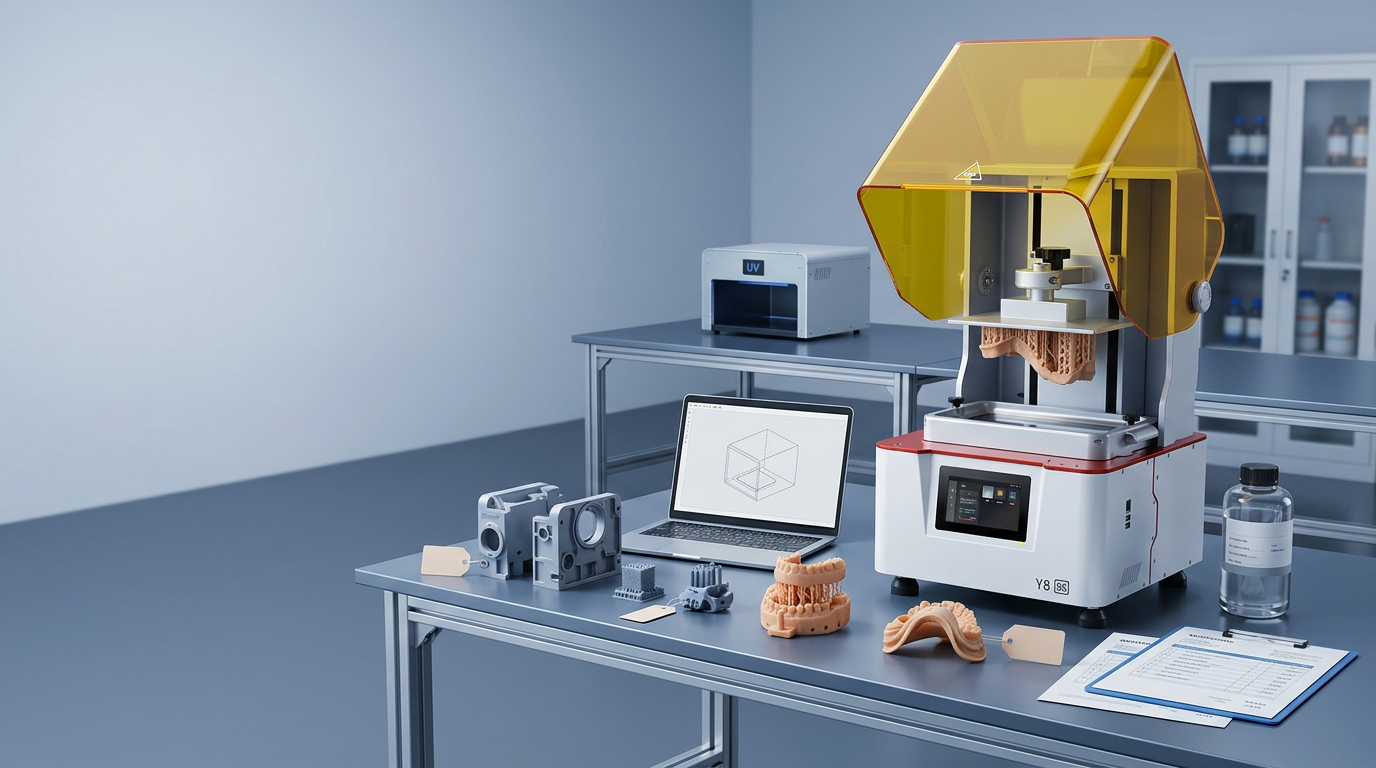
For professional resin applications, a buyer should not evaluate the printer alone. The complete cost should include:
- Printer hardware.
- Resin material.
- Build platform and resin tank.
- Washing process.
- UV curing box.
- Cleaning tools and PPE.
- Software and slicing workflow.
- Spare parts and maintenance.
- Operator training.
- Failed-print allowance during process setup.
- Technical support.
If you are comparing a printer for industrial samples, it is often better to evaluate the complete workflow around a machine such as the Eternal M2 industrial resin 3D printer instead of looking only at the printer price.
Why Professional Resin 3D Printers Cost More Than Basic Machines
A professional resin 3D printer is not priced only by its screen size or advertised resolution. The real value comes from stability, repeatability and workflow control.
1. Build Volume
Larger build volume usually increases cost because the machine needs a larger exposure system, stronger structure, stable Z-axis movement and a more controlled resin vat design.
For factories, build volume affects how many parts can be printed in one batch. A larger printer may reduce labor cost and waiting time if your team needs multiple samples per day.
2. Accuracy and Repeatability
Resolution numbers look attractive in marketing, but professional buyers should focus on whether the machine can repeatedly produce usable parts. For dental models, industrial prototypes or assembly samples, repeatability is often more important than a single successful print.
3. Resin Compatibility
A good printer should support the resin required by your application. Industrial model resin, ABS-like resin, casting resin, dental model resin and flexible resin may require different exposure settings and post-curing conditions.
For elastic sample parts, buyers may need a dedicated workflow around flexible resin 3D printers rather than assuming every resin printer can process flexible materials well.
4. Workflow Stability
In resin 3D printing, the printed part is not finished when it leaves the machine. Washing, support removal and UV post-curing can strongly affect final performance. PAMA’s resin handling guidance also emphasizes consulting supplier Safety Data Sheets, using proper PPE and not disabling printer safety features when working with UV-curable resins.
5. Technical Support
Factories and dental labs usually need more than a machine. They need help with resin settings, sample validation, support strategy, maintenance and troubleshooting. A low-cost printer without support may create hidden costs when operators spend days solving exposure, adhesion or deformation problems.
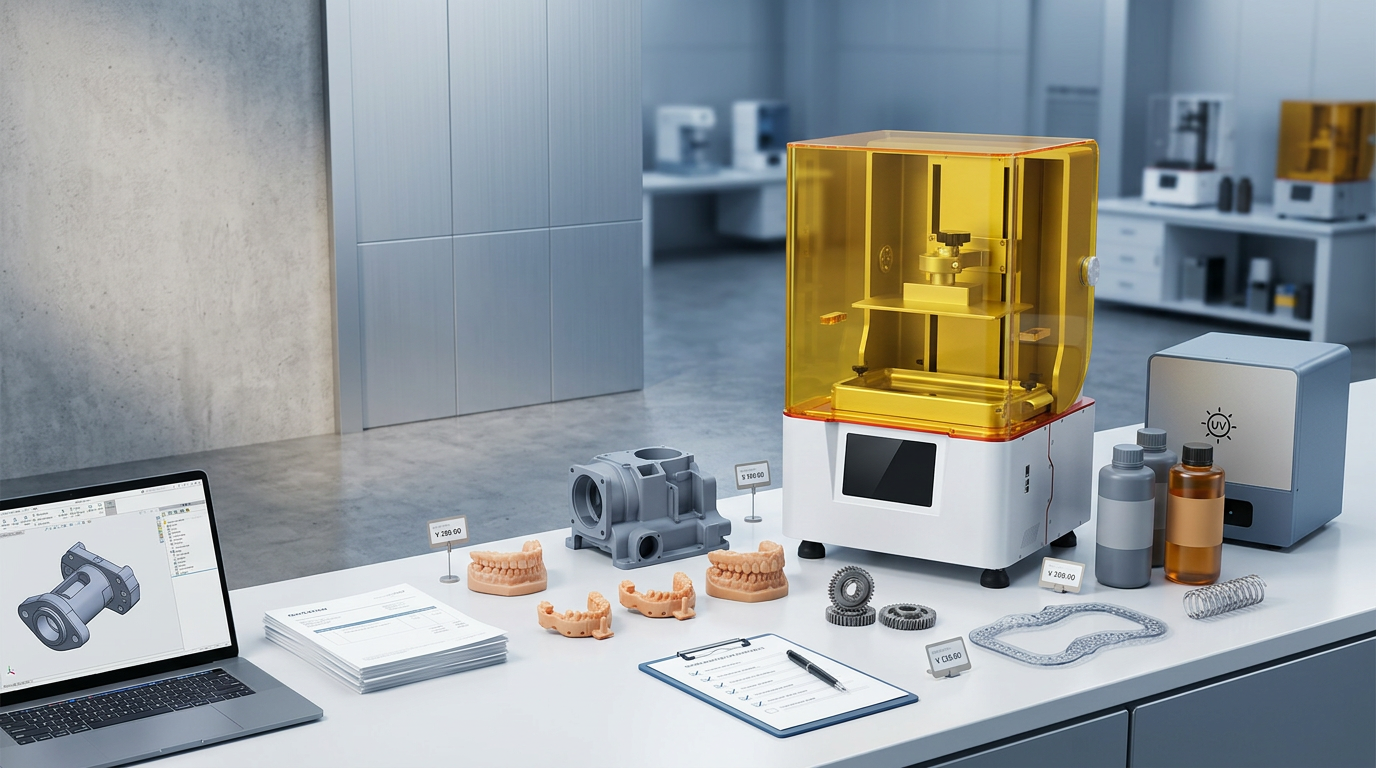
Practical Table: Which 3D Printer Budget Fits Your Application?
| Application | Recommended Printer Type | Budget Priority | What to Confirm Before Buying |
|---|---|---|---|
| Factory prototyping | Industrial resin 3D printer | Build volume, stability, resin compatibility | Part size, surface requirement, batch quantity, post-processing |
| Product development | Professional resin 3D printer | Accuracy, speed, material options | Whether the part is for appearance, assembly or functional testing |
| Dental lab models | Dental resin 3D printer | Accuracy, repeatability, dental resin workflow | Resin indication, curing workflow, model accuracy requirement |
| Dental clinic use | Dental 3D printer + controlled workflow | Ease of operation, safety, resin documentation | Customers should confirm resin indication, post-curing process and local regulatory requirements before clinical or intraoral use. |
| Model-making company | High-detail resin 3D printer | Surface finish, fine details, batch efficiency | Model size, detail requirement, support marks, finishing workflow |
| Flexible samples | Flexible resin 3D printer | Resin handling, exposure tuning, part elasticity | Shore hardness, tear resistance, wall thickness, curing process |
| Research center | Configurable professional machine | Material testing, process flexibility | Open parameters, resin compatibility, documentation and support |
For dental users, products such as the Eternal Y8 dental 3D printer or Eternal D1 dental 3D printer may be evaluated based on lab workflow, print volume and resin requirements.
The Hidden Costs Behind a Good 3D Printer
The printer price is only one part of the purchase decision. A professional buyer should calculate the total cost of ownership.
Resin Cost
Resin cost depends on material type. Standard model resin is usually different from dental resin, casting resin, ABS-like resin or flexible resin. The right resin may cost more per kilogram, but it can reduce failures and improve part suitability.
Failed Prints During Setup
Even with a good machine, new users may need time to tune supports, orientation, exposure and post-curing. This is normal in professional resin printing. The cost should be planned, not ignored.
Washing and UV Curing
Printed resin parts usually require washing and UV post-curing. A UV curing box is not just an accessory; it is part of the process. For dental and functional resin parts, the curing process should follow resin supplier documentation and application requirements.
Labor Cost
A printer that needs constant manual adjustment may be expensive to operate. For factories, the labor cost of monitoring, cleaning, support removal and reprinting can exceed the difference between a cheap machine and a better professional system.
Maintenance and Spare Parts
Consumables may include release film, resin tanks, build platform surfaces, filters, gloves, cleaning materials and replacement components. These should be included in the buying budget.
Ventilation and Safety Setup
UV-curable resin should be handled carefully. PAMA states that UV-curable resins should be handled as chemicals, with supplier SDS documents used as primary safety and handling references.
Workflow Checklist: How to Estimate the Real Cost Before Buying
Use this checklist before asking for a quotation.
Step 1: Define the Application
Decide what the printer must produce:
- Dental models.
- Surgical guides or dental appliances, depending on resin indication.
- Industrial prototypes.
- Appearance models.
- Flexible parts.
- Casting patterns.
- Engineering samples.
- Small-batch production parts.
Step 2: Confirm Part Size
Measure your typical part size, not only the largest possible part. A larger printer may be useful if you need batch production, but an oversized machine may not be necessary if your parts are small and low volume.
Step 3: Confirm Accuracy Requirement
Ask whether the part needs:
- Visual accuracy.
- Dimensional fit.
- Assembly testing.
- Smooth surface finish.
- Dental model accuracy.
- Elastic deformation.
- Casting performance.
Step 4: Match Resin to Application
The printer must match the resin workflow. Do not choose a printer first and search for resin later. Resin behavior affects exposure, supports, washing, curing and final part performance.
Step 5: Include Post-Processing
Budget for:
- Washing method.
- UV curing box.
- Drying space.
- Support removal tools.
- Cleaning supplies.
- PPE.
- Waste handling.
Step 6: Estimate Monthly Usage
Calculate:
- Prints per day.
- Parts per batch.
- Resin consumption.
- Labor time.
- Failed-print allowance.
- Urgency of delivery.
- Required support response.
Step 7: Ask for Technical Advice
Before final purchase, share your model size, resin requirement, application and expected workflow with the supplier. For Yidimu, this helps recommend whether an industrial, dental or flexible resin system is more suitable.
How to Decide Whether a More Expensive Printer Is Worth It
A higher-cost printer may be worth it when it solves a production problem. For example, if a factory needs daily prototypes before mold making, a stable resin printer can shorten development cycles. If a dental lab needs repeatable model output, workflow reliability may matter more than the lowest purchase price.
A more expensive printer may be justified when it provides:
- Larger build area.
- More stable Z-axis movement.
- Better exposure uniformity.
- Stronger machine structure.
- More suitable resin workflow.
- Better technical support.
- Faster batch output.
- Lower failure rate after setup.
- Easier maintenance.
- Better fit for professional post-processing.
However, a higher price does not automatically mean the printer is the right choice. A good printer must match the application. If your parts are small, simple and low volume, a large industrial machine may not be necessary. If your parts require flexible resin, a general-purpose resin printer may not be enough.
For soft sample development, a dedicated option such as the Flex G2 flexible resin 3D printer may be more relevant than choosing only by machine size.
Common Mistakes to Avoid
1. Buying Only by Advertised Resolution
Resolution is important, but it does not tell the whole story. A professional result depends on exposure control, resin behavior, machine stability, supports, washing and curing.
2. Ignoring Post-Curing
For resin printing, UV curing can affect part strength, surface condition and final usability. This is especially important for dental and functional resin applications.
3. Choosing the Cheapest Printer for Professional Work
A low price may look attractive, but failed prints, unstable output and lack of support can increase real cost.
4. Assuming One Resin Works for Everything
Dental models, flexible parts, casting patterns and industrial prototypes may need different resin properties. Customers should confirm material suitability before production use.
5. Forgetting Operator Training
A good printer still needs correct orientation, support design, resin handling, washing and maintenance.
6. Comparing Printer Price Without Comparing Workflow
One supplier may quote only the printer. Another may include resin advice, curing equipment, sample printing and technical support. These are not the same purchase.
7. Overbuying Build Volume
A very large printer may not be necessary if your parts are small. The correct build volume should match your average workload, not only a rare oversized part.
8. Treating Dental Printing as Ordinary Model Printing
Dental applications require more caution. Customers should confirm resin indication, post-curing process and local regulatory requirements before clinical or intraoral use.
Conclusion: How Much Does a Good 3D Printer Cost?
So, how much does a good 3d printer cost? For casual users, a good machine may cost only a few hundred dollars. For factories, dental labs, clinics, model shops and R&D teams, a good professional 3D printer usually requires a larger budget because the real value is not only the machine—it is the complete workflow.
A professional buyer should compare cost by application, part size, resin requirement, accuracy, batch volume, post-processing and technical support. The best purchase is not always the cheapest printer or the largest printer. It is the system that can produce the required parts consistently with a manageable workflow.
If you are evaluating a resin 3D printer for industrial, dental or flexible material applications, contact Yidimu with your model size, resin requirement, application and expected workflow. Yidimu can help you compare suitable machine types, resin options, UV curing requirements and sample printing possibilities before purchase.
FAQ
How much does a good 3D printer cost for a factory?
A good factory-use 3D printer often costs more than a basic desktop machine because it needs stable output, suitable build volume, resin compatibility and reliable post-processing. Many professional resin systems fall into the several-thousand-dollar range or higher, depending on configuration and application.
Is a resin 3D printer more expensive than an FDM printer?
Resin printers are not always more expensive, but professional resin workflows may cost more because they require resin materials, washing, UV curing, PPE and process control. Resin printing is often chosen for fine details, smooth surface finish and professional model quality.
What is the best 3D printer for dental labs?
The best dental 3D printer depends on the lab’s model volume, resin indication, accuracy requirement and post-curing process. Customers should confirm resin indication, post-curing process and local regulatory requirements before clinical or intraoral use.
What should be included in a professional 3D printer budget?
A complete budget should include the printer, resin, resin tank, build platform, washing tools, UV curing box, PPE, cleaning materials, spare parts, operator training and technical support.
Is a more expensive 3D printer always better?
No. A more expensive printer is only better if it matches your application. The right choice depends on part size, material, accuracy, batch quantity, workflow and service support.
How do I know if I need an industrial resin 3D printer?
You may need an industrial resin 3D printer if you print prototypes or samples regularly, need stable dimensions, require batch output, work with engineering models or need better workflow reliability than basic desktop machines can provide.
Can one 3D printer print dental, industrial and flexible parts?
Some resin printers can support multiple resin types, but not every printer is suitable for every material. Flexible resin, dental resin and industrial model resin may require different exposure settings, curing conditions and workflow controls.
What information should I send before asking for a quotation?
Send your part size, model files if available, application, resin requirement, expected print quantity, surface finish requirement and post-processing expectation. This helps the supplier recommend a suitable printer and workflow.