Searchers asking “how to dispose of resin 3D printing waste” are looking for clear instructions, regulations, and best practices for handling resin waste in professional settings. The intent is how-to guidance for factory or lab managers, dental professionals, or R&D teams who use resin 3D printers and must follow safety and environmental rules. They want step-by-step advice on treating uncured resin, wash fluids, and printed parts, with emphasis on compliance (OSHA, EPA, ECHA, local laws) and preventing pollution or hazards.
Understanding Resin 3D Printing Waste
Resin 3D printing waste includes any materials contaminated by uncured photopolymer (liquid resin). Key waste types are:
- Uncured liquid resin: leftover resin in tanks, pour-offs, or spills.
- Support structures/failed prints: removed or broken pieces that still have uncured resin.
- Cleaning liquids: alcohol (IPA) or water used to wash prints, which contain dissolved resin.
- Waste filters, wipes, and PPE: cloths, paper towels, or filters with resin residue.
Unlike filament plastics, liquid resin is not recyclable and often meets the definition of hazardous waste. It can irritate skin, eyes, and lungs, and pollute water if mishandled. Therefore, the disposal process must neutralize the resin (cure it) and comply with chemical waste rules.
Safety and Regulatory Considerations
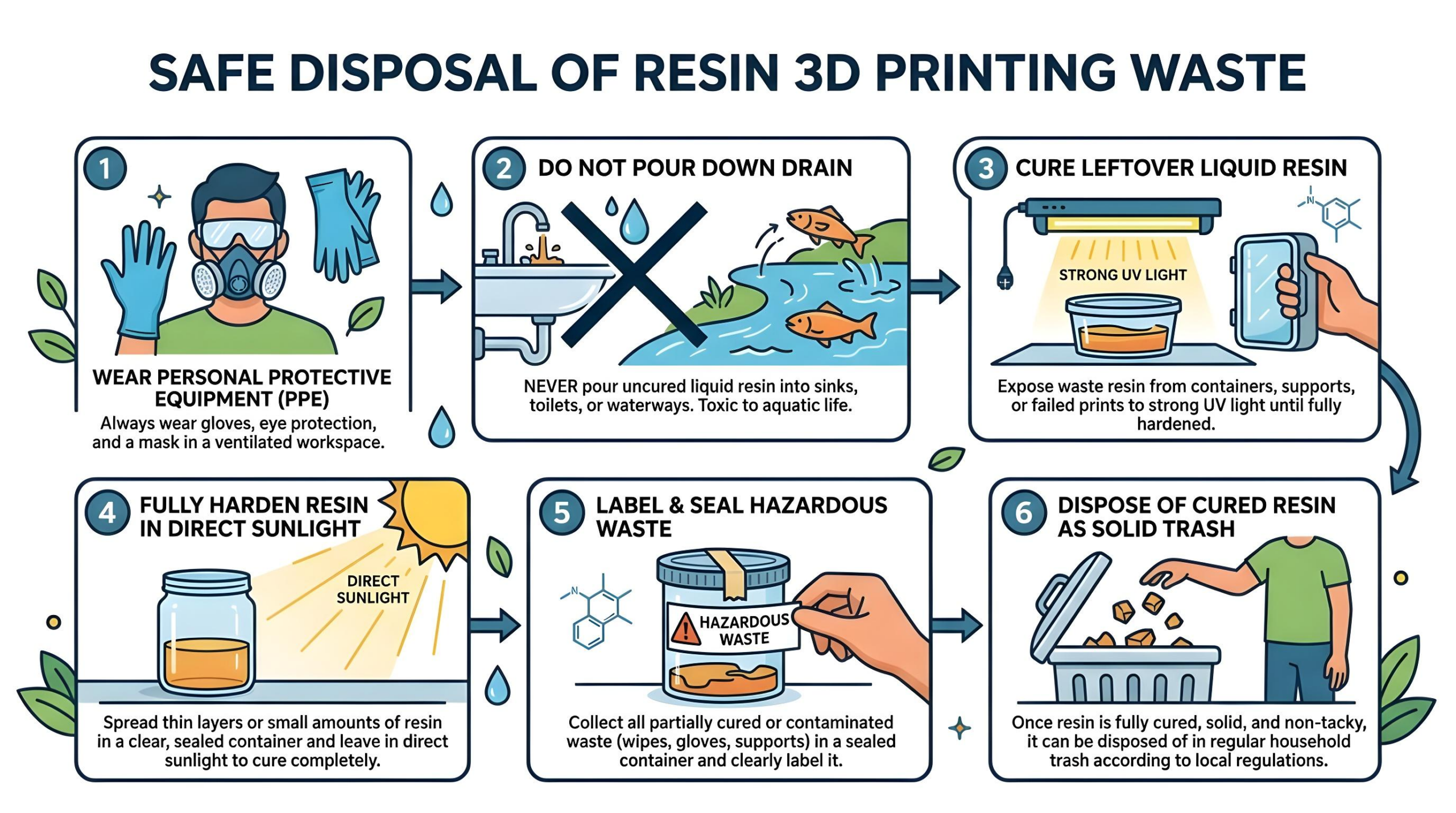
- Personal Safety: Always wear chemical-resistant gloves and eye protection when handling uncured resin or solvents. Work in a well-ventilated area or use local exhaust to avoid VOC fumes. Consult the Safety Data Sheet (SDS) for each resin used; it will list hazards and disposal instructions.
- Local Regulations: Treat uncured resin and resin-contaminated solvents as chemical/hazardous waste unless your SDS explicitly says otherwise. Check with local authorities (EPA in the U.S., ECHA in EU, or regional environmental agencies) for waste determination. In some cases, letting resin cure on-site needs a permit.
- Dental Use Caution: If the resin or models are for dental or medical use, be especially cautious. Customers should confirm resin indication, post-curing process and local regulatory requirements before any clinical or intraoral use. (Disposal steps are similar but always follow healthcare waste rules when applicable.)
Step-by-Step Disposal Workflow
- Collect and Label Waste: Assemble all resin waste (unused resin, rags, IPA, water wash) in dedicated, clearly labeled containers (e.g. “Waste Resin”). Keep liquid and solid waste separate. Seal containers to prevent spills or evaporation.
- Cure the Resin: Use UV light (in a curing box or sunlight) to fully harden any uncured resin. This includes leftover resin in containers and resin-soaked wipes or filters. Expose them until the resin turns solid (no tackiness). UV curing boxes (such as Yidimu’s 405nm UV curing box) or sunlight can do this effectively. Curing converts toxic monomer into inert polymer, making the waste safer.
- Manage Solvent and Wash Liquids: Let resin-contaminated IPA or water settle in a closed container and cure the resin solids (e.g. by UV or sunlight). The remaining liquid can often be treated as solvent waste. Some guidelines suggest filtering or evaporating IPA and recovering resin solids. Alternatively, add cured resin dust to solid waste and send solvent to hazardous waste disposal. Never pour solvent with dissolved resin directly down drain.
- Segregate Non-Hazardous Waste: Once resin is fully cured, the solid polymer waste (prints, support material, cured leftovers) can usually go in regular trash (as inert plastic) – but confirm local rules. For many jurisdictions, cured photopolymer is considered non-hazardous solid waste. Label it appropriately (e.g. “3D Resin Waste – cured”) and dispose with normal or industrial plastic waste.
- Handle Hazardous Waste: Any waste left uncured (or if local law requires) must be treated as hazardous. Hire a licensed chemical waste carrier or facility to pick up the waste stream. Follow labeling and documentation (SDS and EPA ID numbers if required). Do not attempt to neutralize or dilute hazardous waste on your own without guidance.
- Document and Consult: Keep records of disposal (SDS sheets, permits, waste manifests). Consult environmental professionals or agencies if unsure about classification. Employees should be trained on waste streams and emergency spill cleanup.
Practical Disposal Table
| Waste Type | Treatment/Curing Step | Disposal Method | Notes |
|---|---|---|---|
| Unused Liquid Resin | Cure under UV (sunlight/box) | Collect and send to hazardous waste disposal (if uncured) or dispose as plastic when cured | Do not pour down drains or trash. Often considered hazardous until cured. |
| Resin in IPA or Water | Let resin solidify/cure (UV) | Filter/evaporate solvent; cure and discard resin solids as plastic | IPA can be recycled via filtration. Ensure cured resin removed before disposing liquid. |
| Support Prints / Scraps | Ensure fully post-cured (UV) | Dispose as inert solid waste (regular trash) | If prints touched skin/chemicals, treat scrap as mixed waste. |
| Contaminated Wipes/Cloths | Cure in sealed bag or box | Once cured, discard with solid waste; before curing, treat as chemical waste | Wear gloves; keep in sealed container until cured. |
| Filters/Ventilated Waste | Remove resin residue, UV cure | Dispose filter as hazardous (pre-cure) or regular waste (post-cure) | For air filters, follow manufacturer’s instruction on resin disposal. |
| UV-Cured Printed Parts | No action needed (already inert) | Regular plastic/composite waste bin or landfill | Cured prints are generally non-hazardous, but recycling options are limited. |
This table summarizes typical resin waste types and recommended actions. Always refer to local environmental regulations for definitive disposal methods.
Workflow / Checklist
Follow this checklist for daily resin printing waste management:
- Preparation:
- Read the resin’s Safety Data Sheet (SDS) before printing. Identify hazardous components.
- Label waste containers (resin, IPA, cured waste). Keep resin bottles sealed except during use.
- During Printing:
- Use spill trays to catch drips. Keep extra resin in original containers.
- Do not mix different resin chemistries in one container.
- After Printing – Cleaning:
- Wear nitrile gloves and goggles when cleaning prints (protect skin from uncured resin).
- Wash prints in IPA or water (depending on resin type) in a covered container to minimize vapor. Use ultrasonic bath if needed.
- Collect used IPA/water and filter to remove resin. Save for reuse or solvent recycling.
- Waste Curing:
- Place all uncured resin waste (gloves, wipes, leftover resin, rinse slurry) in a clear plastic container or on a curing platform.
- Expose to UV light or sunlight for at least a few hours until the material hardens completely.
- Verify there is no liquid residue. Ensure wax-like solids are not sticky.
- Waste Segregation:
- Put cured resin and cured cleaning materials into solid waste bins (trash) if allowed.
- Store uncured liquid or gel waste separately and label “Hazardous Waste – Uncured Resin.”
- Disposal and Documentation:
- Contact a licensed hazardous waste hauler to pick up uncured hazardous material (if required by volume or local law).
- Fill out any required waste manifests or EPA reporting forms.
- Include SDS sheets in waste paperwork.
- Post-Disposal:
- Clean work area with ethanol or soap/water; dispose cleaning cloths after curing.
- Report and track disposal in company records.
Common Mistakes to Avoid
- Throwing liquid resin in regular trash: Uncured resin can leak, injure sanitation workers, and contaminate landfills. Always cure first.
- Pouring resin or IPA down drains: This can harm wastewater systems and violate environmental laws. Never pour resin-contaminated liquids into sinks or sewers.
- Assuming all waste is non-hazardous: Some small amounts of resin waste may still trigger hazardous-waste rules. Don’t guess – check SDS and local regs.
- Inadequate PPE: Handling resin without gloves or eye protection can cause burns and allergic reactions.
- Mixing chemistry in one waste bin: Different resins or materials may react. Keep waste streams separate by resin type.
- Skipping labeling: Failing to label waste containers can lead to improper handling by staff or waste collectors.
- Forgetting documentation: Industrial and dental printers often require records of disposal (especially for large volumes).
FAQ
Q: Can I throw away fully cured resin models in regular trash?
A: Yes, once resin is fully cured (hardened by UV light), it is considered an inert solid and can typically be disposed of as non-hazardous solid waste. However, it cannot be recycled as plastic. Check local rules: if in doubt, wrap cured resin in a sealed bag and dispose with industrial waste.
Q: How do I cure leftover resin safely?
A: Place the resin or resin-soaked items in a clear container or under a UV curing box. Expose them to UV light or direct sunlight until they harden completely. Avoid open-air evaporation because residual fumes may be hazardous. A dedicated UV-curing chamber (like Yidimu’s UV curing box) ensures even curing.
Q: What about IPA (isopropyl alcohol) used for cleaning?
A: IPA with dissolved resin should be treated cautiously. You can let resin particles settle and UV-cure the residue, then handle the remaining IPA as solvent waste. Do not pour resin-laden IPA down the drain. Some labs collect dirty IPA for hazardous waste pickup or distill it in a fume hood to recover pure IPA and resin solids.
Q: Do I need special permits to dispose of resin waste?
A: It depends on your location and volume. In the U.S., small generators (<220 lbs of hazardous waste/month) have fewer requirements, but larger operations need EPA ID numbers and formal disposal contracts. Always check local environmental regulations. If in doubt, consult a waste management professional.
Q: Is curing waste resin enough to make it non-hazardous?
A: Curing greatly reduces hazard (uncured monomers become inert polymer), but some authorities still classify cured resin as non-hazardous solid. However, until cured, all resin waste is potentially hazardous. Curing lets you dispose of the solids with regular trash, but keep documentation that you did so.
Q: How should dental offices dispose of resin prints?
A: Dental resin waste follows the same principles. Cure any model or waste materials before disposal. For patient-contact applications, confirm that the resin’s SDS allows normal disposal after curing. Always “confirm resin indication, post-curing process and local requirements” before dental use, and follow healthcare waste protocols if resin contacted saliva or bodily fluids.
Q: Can cured resin be recycled?
A: No. Cured 3D resin is not recyclable in normal streams. It should be disposed of as described above (usually in solid waste) because photopolymer is a thermoset plastic.
Q: Who should I contact for disposal?
A: Use a licensed hazardous waste collection service for uncured resin and contaminated IPA if required. Otherwise, certified chemical disposal firms are recommended. At minimum, consult a local environmental regulator for guidance.
Q: Where can I get help or products for this process?
A: Yidimu offers equipment (UV curing boxes) and resins for professional 3D printing workflows. For disposal and safety queries, contact Yidimu to discuss your printing volume, model size, resin type, and workflow. Provide details like expected build size, resin requirements, and application to get the best recommendation.