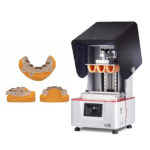
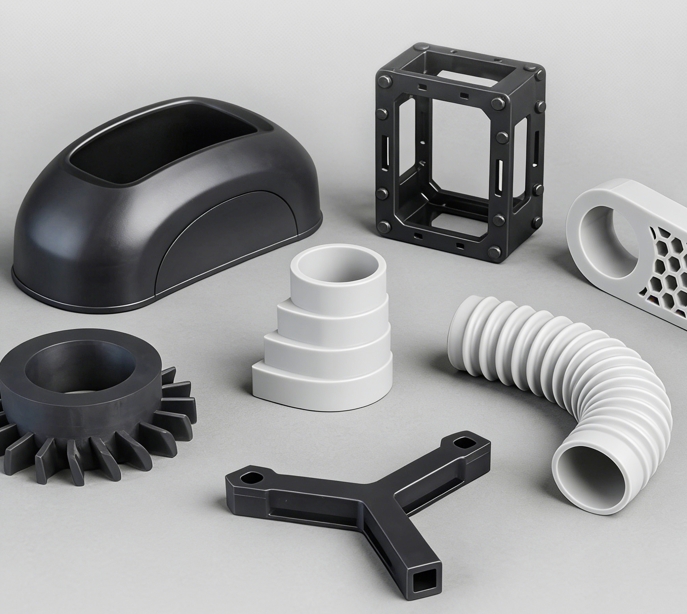
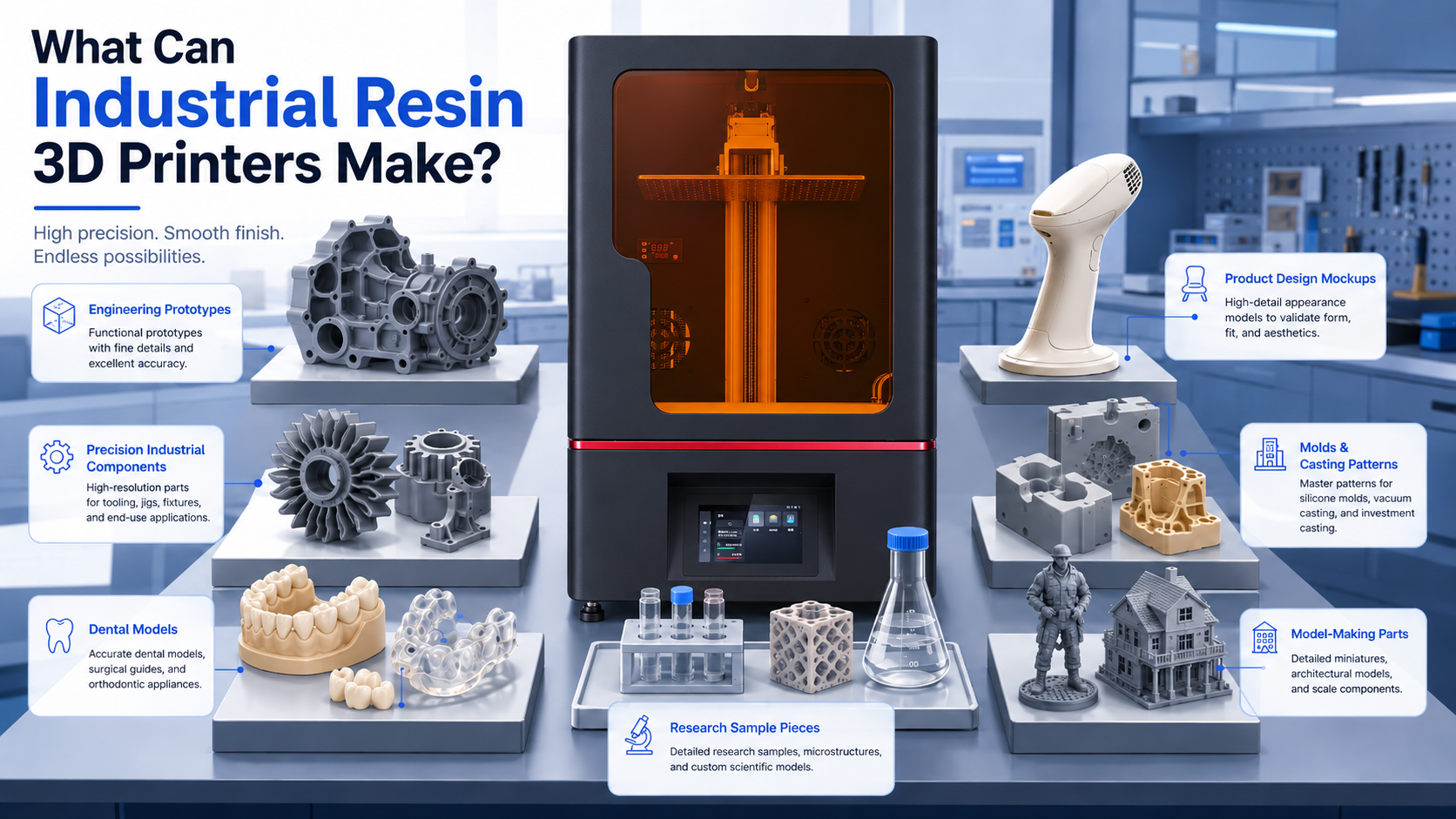
Industrial resin 3D printers can produce highly detailed, precision parts across many industries. They create prototypes and models (for engineering, automotive, aerospace, consumer products), tooling and fixtures (jigs, molds, master patterns), dental and medical models (orthodontic arches, surgical guides), jewelry patterns (wax or castable models), architectural and art models (scale buildings, figurines), and even flexible functional parts (wearable components). Using UV-curable photopolymer resins, these printers deliver smooth, high-resolution surfaces and complex geometries that are hard to achieve with machining. (Users should choose appropriate resin grades and follow post-curing steps especially for clinical or functional applications.)
Applications in Industrial Prototyping and Manufacturing
Industrial resin printers excel at making engineering prototypes and production aids. Engineers use them to rapidly print functional prototypes, enclosures, brackets, and housing models. Because resin prints have exceptionally fine detail and accuracy, they are ideal for parts with tight tolerances or intricate features, such as aerodynamic wind-tunnel models, electrical connectors, or tooling components (jigs, fixtures, molds). The high surface finish means less post-processing and better aesthetics, useful for final-stage design reviews or direct tooling patterns. These machines are also used in small-batch manufacturing, where short production runs or customized parts are needed. For example, factories often 3D-print custom fixtures, assembly tools, and replacement components in small quantities, saving time over traditional machining.
Industrial resin printers often offer large build volumes for medium-to-large parts. For example, a Yidimu 13.6-inch 7K industrial printer provides a 298×165×370 mm build area, supporting medium-sized prototypes or multiple parts per print. A larger build space lets factories print bigger models (architectural facades, large prototypes) or batch multiple smaller pieces at once, improving efficiency.
- Prototyping (Product Development): Design teams use resin printers to create consumer product prototypes (gadgets, enclosures), automotive dash panels, and aerospace parts. 3D-printed resin prototypes can validate form, fit and function before costly tooling.
- Tooling and Small Production: Resin prints serve as molds and masters. For instance, silicone molds can be cast from resin masters, or investment casting patterns can be 3D-printed for metal parts. Assembly jigs and inspection fixtures are also commonly printed in strong rigid resins.
- Industrial Parts: Low-volume manufacturing of technical parts – such as custom gears (with tough resins), electronic housings, and sensor mounts – is possible with industrial resin printers. These parts may require engineering-grade resins for durability.
Dental and Medical Models
Resin 3D printing is widely adopted in dental clinics and labs for making dental models, aligners, surgical guides, and custom appliances. For example, an intraoral scan can be turned into a printed dental arch model or implant guide. Resin printers produce the fine detail and smooth surfaces dentists need (e.g. for crown and bridge models or orthodontic casts). In medical fields, resin printers are used to create anatomical models (e.g. bone and organ replicas) for surgical planning and education, as well as custom medical supports or orthotics.
Important: Clinical and intraoral parts require special resins and processes. Customers should confirm resin biocompatibility, post-curing procedures, and local regulatory requirements before using printed parts in or on patients.
Common Dental Resin Prints
- Dental Arch Models: Accurate models for crowns, bridges, and aligners. Printed in rigid model resin for high dimensional accuracy.
- Surgical Guides and Splints: Custom guides for implant placement or orthodontic bite splints. These need certified biocompatible resin and careful curing.
- Wax/UHPC Patterns: Bite guards, crowns, or temporary prosthetics can be printed using castable or biocompatible resins. These parts must meet dental lab specifications and use resins with the correct indication.
Jewelry, Fashion, and Creative Prototyping
Industrial resin printers are popular in jewelry and fashion industries. They can print wax or castable patterns for rings, necklaces, and custom designs, capturing extremely intricate details in small parts. This eliminates hand-carving patterns and speeds up the casting process. In art and entertainment, resin printers make detailed figurines, collectibles, models, and props (e.g. miniatures for games, movie props, costume accessories). For example, a high-resolution printer can produce a finely detailed character or sculpture (as shown below) that would be difficult to sculpt by hand.
Industrial resin printers achieve very fine detail and smooth surfaces, ideal for models and figurines. The photo shows a 13.6-inch Yidimu printer and a detailed resin-printed figure. 3D-printed statues, design prototypes, or cosplay props can be made in photopolymer resin with textures and features that rival hand-finished models.
- Jewelry Patterns: Design prototypes and casting molds for metals. Resin printers can use special castable resins that burn out cleanly in investment casting.
- Fashion Accessories: Unique or custom items like shoe molds, customized eyewear prototypes (though eyewear often uses powder-based 3D printing). Soft resin (e.g. 50A-90A shore hardness) printers like Yidimu’s Flex Pro make flexible parts (shoe insoles, wearable straps).
- Entertainment Models: Scale replicas of buildings, vehicles, terrain for film sets or hobby models. Resin printing allows complex overhangs and textures (e.g. rock surfaces, fur details).
Architectural, Engineering, and Education Models
Resin printers are useful for scale architectural models and engineering concept models. Architects use them to create building models with fine detail and smooth facades. Engineers and educators print mechanical assemblies or anatomical models to demonstrate concepts. Since resin prints have high fidelity to the digital design, they help in evaluating form and structure.
- Architectural Models: Completed building designs, cityscapes, interior layouts. Color and transparency options in resins allow highlighting features.
- Engineering Demonstrations: Complex assemblies or prototypes of mechanisms in engineering classes and R&D. Transparent resins can show internal structures or fluid flow components (caution: need post-cure for water-tightness).
- Educational Samples: Scientific models (molecules, human organs, fossils) for classrooms or labs, printed in durable resins.
Resins and Material Considerations
Resin 3D printers can use a wide range of photopolymer materials. Standard resins produce rigid, smooth plastic parts (similar to ABS). Engineering resins offer toughness, high temperature resistance, or biocompatibility. Castable resins burn out cleanly for investment casting. Flexible resins (shore 50A–90A) are available for elastomeric parts. The choice of resin determines the part’s properties (strength, flexibility, color, transparency).
| Application | Example Parts/Models | Resin Type | Printer Requirements |
|---|---|---|---|
| Product Prototypes | Enclosures, mechanical prototypes | Standard/Tough resin | Medium build volume, high resolution |
| Automotive Components | Dash panels, knobs, fixtures | Durable (high-temp) resin | Larger build, reinforced Z-axis |
| Aerospace Parts | Wind-tunnel models, jigs | High-temp or rigid resin | Large build, precise laser/DLP system |
| Dental Models | Dental arches, guides | Dental model resin | Small-medium build, certified workflow |
| Medical Models | Anatomical models, surgical aids | Biocompatible resin (if needed) | Accuracy, regulatory-compliant |
| Jewelry Design | Casting patterns, filigree pieces | Castable resin | Ultra-fine detail, small nozzle/resolution |
| Footwear/Wearables | Shoe molds, insoles | Flexible (elastomer) resin | Large build (like Flex Pro), material support |
| Architectural Models | Building mock-ups, cityscapes | Clear/colored resin | Larger build, stable UV uniformity |
| Toys & Art | Figurines, game miniatures | Colored or standard resin | Very high resolution for details |
| Electronics Housings | Circuit enclosures, connectors | Functional resin | Consider thermal/electrical properties |
Table: Example applications of industrial resin 3D printers, recommended resin types, and printer considerations.
Workflow Checklist for Industrial Resin Printing
Planning: Define part dimensions, required resolution, and quantity. Confirm that a resin printer’s build volume and accuracy suit the part size.
Material Selection: Choose an appropriate resin (engineering, castable, dental, etc.) that matches the part’s end-use. For dental/medical, ensure biocompatibility and regulatory compliance.
File Preparation: Create or obtain a high-quality 3D CAD model. Use printer software to orient the part and generate supports. Thinner features and overhangs require careful support placement.
Printing: Load resin and start the print. Monitor the process (machines like Yidimu offer interior lights and cameras for real-time viewing). Ensure stable temperatures and environment.
Post-Processing: After printing, parts must be washed (e.g. in isopropyl alcohol) and post-cured under UV to achieve full strength. Follow manufacturer guidelines: typical steps are rinse, dry, support removal, and UV curing. For medical/dental parts, validate all post-processing steps.
Quality Check: Measure critical dimensions and inspect surface finish. If needed, sand or paint parts for presentation. Verify that mechanical or visual requirements are met.
Common Process Steps: The general workflow is:
- Design & Prepare (software): CAD → STL → slicing.
- Print Setup: Load file, position model, generate supports, select resin profile.
- Print: Start the light-curing process; monitor.
- Wash: Remove uncured resin (isopropanol baths).
- Cure: UV post-cure for full polymerization.
- Finish: Remove supports, trim and polish. Inspect final part.
(Checklist style: high-level steps in resin printing workflow.)
Common Mistakes to Avoid
- Skipping Resin/Workflow Validation: Don’t assume any resin will work. Always test resin compatibility and machine settings with a sample print first. In medical or dental contexts, never skip regulatory and biocompatibility checks.
- Poor Orientation and Support Planning: Printing a part without proper supports can cause failed prints or surface defects. Always analyze overhangs and orientation for structural integrity.
- Overlooking Build Volume: Selecting a printer with insufficient build area can force you to split models. Double-check build dimensions (e.g. Yidimu’s 13.6″ printer offers 298×165×370 mm).
- Skipping Post-Curing: Not fully curing a part will leave it soft and dim out parts over time. Follow UV curing guidelines thoroughly.
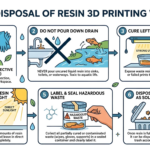
- Ignoring Safety: Resin is toxic in liquid form. Operators should use gloves and goggles, and work in ventilated areas. Dispose of waste resin properly.
- Assuming One-Size-Fits-All: Don’t use hobby or desktop resin workflows for industrial needs. Industrial printers require more robust materials and stable processes.
Frequently Asked Questions (FAQ)
- What industries use industrial resin 3D printers?
Manufacturing, engineering, dental, jewelry, automotive, aerospace, architecture, education, and entertainment industries use resin printers. They are favored for any application needing high detail or complex geometries. - Can resin 3D printers make functional plastic parts or just models?
Industrial resin printers can make functional prototypes and end-use parts, but material strength is generally lower than injection-molded plastics. Tough or engineering resins can produce durable parts (gears, snaps, covers). For purely functional load-bearing parts, other technologies (like DMLS metal or FDM) might be better. - How big can resin-printed parts be?
Build size depends on the machine. Industrial units range from small (a few inches) up to large formats (e.g. 353×198×400 mm for a 16-inch 8K printer). Always verify the printer’s build volume before designing parts. - Can resin printers produce clear or colored parts?
Yes. There are transparent and colored resins for visual models. Transparent resin can make see-through components, though clarity depends on polish and curing. Colored resins (e.g. white, gray, red) are common for prototypes and display models. - What post-processing is required after printing?
Resin prints must be washed (typically with isopropyl alcohol) to remove uncured resin, then fully cured under UV light. Supports are then removed and the part may be sanded or painted. Proper post-processing is crucial for final part quality. - Are there safety concerns with resin printing?
Liquid resin can cause skin irritation; wear gloves and eye protection. Work in a ventilated area to avoid fumes. Used resin and cleaning fluids should be handled as chemical waste. Always read safety data sheets. - Can industrial resin printing replace traditional mold-making?
In many prototyping scenarios, yes. Resin printing can quickly produce complex shapes without molds. For production, short-run plastic parts can use resin prints as master molds or even as direct parts if material properties suffice. It’s not usually a full replacement for high-volume injection molding but excels in fast iteration and low-volume production.
Conclusion and Next Steps
Industrial resin 3D printers are powerful tools for precision prototyping, modeling, and low-volume manufacturing across a range of professional fields. They can fabricate everything from detailed figurines and architectural models to functional prototypes, tooling, dental models, and more. To explore how resin 3D printing can fit your project, consider your model size, target resin material, and application requirements. For example, if you need a large shoe mold in flexible resin, or a batch of dental arches in rigid resin, different Yidimu machines and resins may apply.
Contact Yidimu for a Consultation: Provide your part dimensions, intended resin (e.g. castable, medical, flexible), and required output (prototype, dental model, production samples). Our team can recommend a suitable industrial resin printer model, compatible resin, and workflow. With the right system, resin 3D printing can streamline your product development and production—while ensuring compliance for critical applications.
Recommended Yidimu Internal Links: Learn more about Yidimu’s solutions for prototyping and dental models on our website. For example, see our Yidimu Industrial Resin Printer details and the guide on choosing 3D printers for industrial prototyping.
Optional References: For additional reading on resin 3D printing advantages and applications, see the Stratasys SLA guide and Protolabs design tips. These sources detail the precision and industry uses (medical guides, jewelry patterns, automotive parts, etc.) of resin printing.